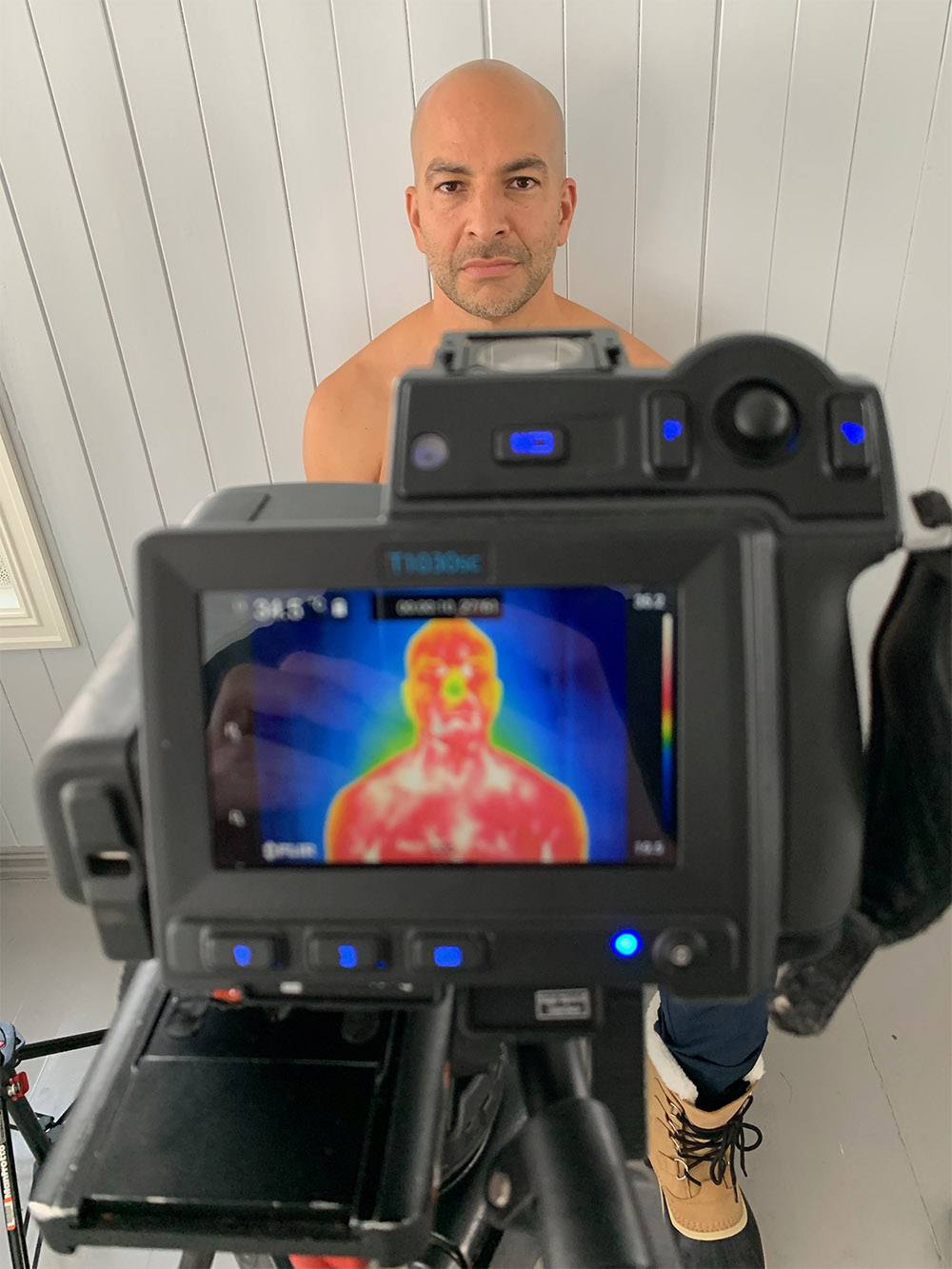
Lance Armstrong's resting HR of 35 and Vo2 and other measures were off the chart.
Mr. Armstrong's Tour de France titles were taken away. His sponsors are gone. He was barred from further competition. People say he should "disappear," hide and speak not another word.
So who became the winner of the Tour, those years, 1999-2005, now that Mr. Armstrong has been deleted? The answer is nobody. Why is this? All the riders finishing second, third, and fourth have been or since been identified as users of banned substances.
If you are a champion, if you come to the Final, if you are on the podium, if you set records, you are going to be tested. Many, many times. The blood police knock on your door at 0400. They try to surprise you at a training site in the Pyrenees. If the tests are negative, many still speculate that you must be using something. If you are eliminated in the first heats, finishing 125th in the General classification, bat .235 in AA, you will seldom, if ever, be tested. Nobody cares. Nobody is envious.
There is like a war between athletes seeking advantage, however small, and governing authorities trying to catch them. The pharmaceutical companies play both sides. They sell lots of drugs to suppliers, legal and illegal. They make better and better drugs. They develop masking drugs. Laboratories devise better and better tests. There is a massive "black market". Millions of Americans use these drugs. Rarely is there a clear medical necessity. Reasons are most often "anti-aging" and "quality of life."
I do a search for athletes suspended for using these drugs. I find a list. Hundreds and hundreds. Every country. Many different sports.
I find accounts of the investigation, inquiry into, and prosecution of many prominent athletes. In some instances, the story is going to be bizarre, surreal, and preposterous. Like the saga of the pursuit of one Barry Bonds. Grand Jury? Testimony from his ex-girlfriend! Jail time for his therapist? Twice?
Roger Clemens got off. Many others are not so lucky. Jose Conseco goes to jail. For others, it is the finish of a career. Nobody seems to remember Ben Johnson in a good light. 9.79! Four of those finishing behind him are later caught. Beautiful and talented Marion Jones was harassed, pressured, brought before Grand Juries, and finally put in jail. Her Olympic medals were taken away.
I read about the years of prohibition. Was this a big success? The "War on Drugs" declared by America, is going well? These ideas went/are going well for criminals and gangsters. How many innocents were killed? How many enforcement people were killed? How many millions[billions] are spent for no gain?
The use of performance-enhancing drugs will never be stopped. I say to the authorities: Give it up.
Give Ben Johnson back his medal. Have a celebration for him.
Excuse, Pardon, Sorry to everybody. Give back Marion's medals. Sorry to Jose.
Congratulations to Barry Bonds on a great career. Have a day for him. Put him in the Baseball Hall of Fame, where he clearly belongs. Stop bothering him, and is a trainer.
If Nike were to say, "We are proud to have Lance Armstrong endorse our products," I will buy their stuff forever.
Stop testing anyone. Athlete's choice. Personal choice. Let them decide what and how to use it. Level the playing field. Let every cyclist begin the tour with a hematocrit of 55. You can get this by living at a high altitude. Use the oxygen deprivation tent or room to simulate altitude. Or take the EPO. Let every cyclist who has a bad day try a boost of testosterone.
Instead of using science to improve or avoid detection, Let's use science to study what medication will actually provide an advantage, and if so, what margin? Let's get some data on dose and timing. Let's expand the scientific literature which examines the gains in performance of reproducible tasks resulting from the display of specific agents.
Most importantly, let's educate. Educate the young. What are the risks? What benefits, if any, can be expected? Do the math on the cost. Is there an acceptable reason for taking these drugs? At what age are they contraindicated? This teaching should be part of a high school curriculum.
Lance Armstrong was a gifted athlete. His musculature had an inherited capacity to consume oxygen which was higher than most. This was then pushed to new heights by a training program with an intensity of second to none. There was a dedication, a discipline brought to the table which was unmatched. He sustained this for many years. No detail was overlooked. Diet was a science. His equipment is state of the art. Many sacrifices were made.
Every year, 1999-2005, he came to this event, considered to be the most severe, grueling of physical tests in all sports. For seven years, he won. Did he make sure his hematocrit was optimized? Did he make sure his testosterone levels were on a par with others? I am sure he did. It did not appear to have been too difficult to avoid detection. Mostly a matter of timing. His fellow competitors likewise. Many of them were eventually caught.
Do you think anabolic steroids will make an "average" athlete a great one? Come again. Take a major league baseball player with a batting average of .250, 7 home runs last year, 20 stolen bases and only 14 errors, and muscle him up with testosterone and a weight training program.. The result? Batting average .215, 12 home runs, 2 stolen bases and 35 errors.
I watch some videos of Barry Bonds. At the plate, his stance seems to radiate power. The head is motionless, and the eye seems to slow the pitch and see the spin; he does not swing at pitches outside the strike zone. He takes a walk 232 times in 2002. Then comes the swing; The motion begins at the feet, the weight shifting, the step forward, shoulders turning, the arms follow, then the, finally, the wrists and hands bring the bat through, at a speed never before; a study in grace and fluid power. No drugs can make a Barry Bonds.
I like the idea of personal choice. I don't want to hurt anyone. If I were to try some Winstrol for my bodybuilding, that would be my choice. It is my body. This will not hurt anyone else.
I don't like rules and laws made by non-participants, trying to limit the choices of those who are on the field of play. Sport is a career choice for many. At the highest levels, the difference between success and failure is slim.
For those who succeed, the rewards can be considerable. Failure is a very bad outcome for many. The chips are down.
From your couch, from your office, boardroom, or court, you should make rules and laws and try to enforce them.
For the most part, using anabolics is not banned in bodybuilding. So I don't want to be in a sequence of an illegal, undercover process. I should not have to be. I would like to be able to go to a physician knowledgeable in this area and obtain a legal prescription. I would like to have proper monitoring. I would like to be assured that the product is of high quality. Nobody, including the doctor, should be penalized.
If you take HGH, anabolic steroids or EPO during your athletic career, gain some advantage, carefully control dosing, have regular blood work, and suffer no side effects, that was your choice.
August 2016: After I wrote this, I listened to an endless stream of preaching from the Holier about the cheaters and how they needed to be erased from the face of the earth. I still have no doubt about what I wrote and don't plan to change a word.
Then I found some company in high places: Lewis Kurlantzick, LLB, Zephaniah Swift, Professor of Law at the University of Connecticut School of Law, wrote in his Apr. 12, 2006 article titled "Is There a Steroids Problem? The Problematic Character of the Case for Regulation," published in the New England Law Review:
"Athletes are in a position to make a decision about what behavior is in their best interest, to weigh the risks and benefits according to their own values. And a paternalistic rule that attempts to prevent the athlete from harming himself runs counter to the important values of independence and personal choice. Moreover, it is likely that the feared harm is neither life-threatening nor irreversible. Presumably, under this health rationale, if performance is enhanced by substances that cause neither short-term nor long-term harm to the athlete, these substances should not be banned."
Norman Fost, MD, MPH, Professor and Director of the Medical Ethics Program at the University of Wisconsin, made the following statement in a Dec. 18, 2006 interview published by Scout.com (a Fox Sports News website) titled "Baseball Men - The Skeptic":
"We allow people to do far more dangerous things than play football or baseball using steroids. We allow people to bungee-jump, ski on advanced slopes, to cliff dive. To eat marbled meat or ice cream pie every day if they want. I don't think we want to go down a path in which we restrict and even criminalize behaviors just because they have health risks. And steroids are so low on the list of drugs or diets that cause serious harm I don't understand why we would start there."
Lincoln Allison, DLitt, Founding Director of Warwick University's Centre for the Study of Sport in Society, wrote the following in an Aug. 9, 2004 article titled "Faster, Stronger, Higher," published in the Guardian:
"A sportsman or woman who seeks advantage from drugs just moves up to the level appropriate to his or her underlying ability…
There are no drugs to enhance the human characteristics of judgment and leadership. If there were, would we not want the prime minister to take them? And if there were drugs for hand-eye coordination, would we not pay more to see a performer who had taken them than one who had not?...
In general, the risk to health from performance-enhancing drugs is considerably less than that from tobacco or alcohol, and we ought not to apply paternalistic moral assumptions to a sport that we are not prepared to apply to the rest of life."
Author unknown