Part One - June 6, 2023
We can calibrate the decline in the quality of American life by comparisons to both societies of the past and contemporary civilization elsewhere. And the result is not encouraging for Americans.
I believe I may have visited 80 percent of the so-called first world countries in Europe and the Middle East, and in most of the major capitals and large cities—Amsterdam, Athens, Berlin, Brussels, Budapest, Lisbon, London, Madrid, Nicosia, Paris, Prague, Rome, Warsaw, etc., as well as the first-, second-, and third-world non-European cities of Algiers, Amman, Ankara, Baghdad, Beirut, Cairo, Damascus, Istanbul, Jerusalem, Kuwait City, Riyadh, Tel Aviv, and Tripoli.
Over the last 40 years, I have had major surgeries in these cities, stayed in “bad areas,” lived for nearly three years abroad, and traveled to their hinterlands. I have been a journalist who visited Iraq twice during the surge of 2006–07, was in Israel during the worst of the suicide bombings, lived in Athens during the 1973 coup and 1974 war in Cyprus, and visited for two weeks Egypt just after the Yom Kippur War. I have seen firsthand the toxic work of dictators like Khadafi, the violence of the PLO, the changes in Erdogan’s Turkey, and the incompetence of socialists in Europe.
And yet, I never saw in the slums of old Cairo or in the worst environs of Brussels and Naples, or amid the poverty of 1970s rural Turkey anything like what I saw in San Francisco this year and last. The undressed on Market Street and near Union Square were routinely smoking dope, injecting drugs, defecating, urinating, and in various states of pre-civilized behavior. The homeless enclaves of Los Angeles are worse. Were these scenes being filmed for The Last of Us?
Beautiful office buildings were empty. Former stores were shuttered.
I don’t think in the dark days of the Iraq surge, I saw routine smash-and-grab or carjacking to the extent of what routinely goes on in our major cities. I wore body armor in Iraq each day and evening when on patrols with soldiers, and felt much safer than I would after hours on the weekends in Chicago, Baltimore, Memphis, or Detroit.
I was operated on for a ruptured appendix and peritonitis on a wooden table with only an ether fix in a Red Crescent clinic in Khadafi’s Libya, and yet I felt the third-world clinic care in terms of the clientele and fellow patients was less scary than what I have witnessed in ER rooms in the Central Valley of California or in Tucson or Washington, D.C.
I used to define America as hyper-civilized by the courtesy and professionalism of its drivers—not far behind those in Canada, the UK, and Australia—especially in comparison to the road madness in Rome or Athens, or Cairo.
But no longer. The daily fare of the Fresno Bee is a recitation of high-speed wrecks, carjackings, fatal DUIs, and hit-and-run smash-ups. When I drive rural roads in central California, I expect that one out of five cars coming in my direction will be drifting into my lane, either due to incompetence, unfamiliarity with U.S. traffic laws (27 percent of Californians were not born in the U.S.), intoxication or drug euphoria—or texting.
Walking in downtown or midtown New York, or in Washington, or Seattle stinks more than I remember of the corniche in Beirut or the harbor promenade in Alexandria. I am much more likely to be accosted by an obnoxious stranger, homeless person, or would-be criminal in downtown LA, San Francisco, or Portland than in Brussels or Naples—and that is saying something given the latter two disasters. I do not think in Paris or Amman people walk into stores, rob them, and walk out with impunity, with the knowledge that clerks will be fired for reporting their thefts.
Part Two - June 7, 2023
When I drive in rural California and see the shacks, trailers, and compounds of 30-40 persons living in ad hoc shelters with Romex wire and water hoses attached to a small farmhouse, I conclude that this poverty is much more a third-world scene than I remember of Tunisia, Algeria, or Turkey.
Or for that matter, the countryside of northern Mexico seems less impoverished than life outside Mendota, San Joaquin, Orange Cove, or Parlier, California. I would take my chances walking at night in Kuwait City over Minneapolis and would likely find a public restroom on California’s I-5 or the 99 dirtier than its counterpart in rural Greece.
Students that I have met in rural Greece were far better educated than their age counterparts in California. Spaniards in the countryside seemed to know more about America than American teens in New York or Philadelphia.
Japanese or Kuwaiti exchange students I had in college were far better educated than most of my own CSU (California State University) students. When I taught at Pepperdine, I explained to Chinese students why they rightly seemed afraid to drive alone into most areas of Los Angeles after hours.
My point? The basics of life, especially in our major cities—health care, safety, cleanliness—have reached medieval proportions.
Or to put it more accurately, there are very different Americas. A sophisticated successful suburban America maintains more or less life as unchanged from the 1970s or 1980s and remains comparable to or better than what is found in Europe.
And then there are red-state rural countryside and small towns that likewise are still civilized.
But in a third of America in parts of the suburbs surrounding the major cities and the cores of almost all our major cities, life is truly third or fourth-world. The ERs are dirty, broke, and mostly exist to attend to evening gunshot wounds and other sorts of inner-city violence.
Garbage piles up on sidewalks around stuffed cans and bins. It is hard to judge whether the smell of marijuana or feces is the stronger odor.
I lost my wallet once in Athens, and it was returned in two hours. I have lost glasses, wallet, and cell phones in my hometown of Selma and usually, they were never returned, or within hours I had thefts show up on my credit cards.
If my car broke down on the side of a freeway, I would prefer it happened in Israel, Germany, or Portugal than in California. There are more broken appliances and wet garbage tossed along the roads of Fresno County than there are in supposedly ragtag Italy.
None of this was true just 20 years ago. When I meet a teen or 20-something person today, I assume he is poorly educated and knows almost nothing about his own country, Gettysburg, World War I, or the Supreme Court. I can be assured only that he is programmed to have the correct ideas about diversity, transgenderism, or the pathologies of his country.
Ignorance and arrogance are a fatal combination, especially when combined with a therapeutic society that has abandoned meritocracy and feels social acceptance and career advantage are found in trashing one’s own culture.
What explains this decline, a decay so rapid that it seems surreal, fantasy-like? How did slow erosion accelerate to produce an unrecognizable country, in which nothing is secure, nothing reliable, nothing predictable anymore?
Part Three - June 9, 2023
Another sign of decline is the weaponization and politicization of institutions. Decadent societies indict their former leaders upon leaving offices. Those in power sic federal agencies on their opponents.
In turn, bureaucrats become agents of those in power, as if in private service—like laptop suppression, diary retrieval, performance-art raiding and arresting, or finding a presidential son’s missing gun.
The Biden family may well have pulled off the greatest pay-for-play grifting scam in presidential history, one that encompassed a decade of selling access to Vice President Biden and supposedly someday President Biden. That the entire kleptocracy will likely only be prosecuted if a Republican administration returns to power is again proof of our third-worldism.
The careers of John Brennan, James Clapper, James Comey, Anthony Fauci, Lois Lerner, Andrew McCabe, Lisa Page, Peter Strzok, and Christopher Wray were weaponized. The above either lied under oath when pressed, suppressed an email trail that exposed their culpability or worked hard to discredit or destroy a political candidate they opposed, or simply stonewalled when asked under oath for accountability.
In third-world America, Matt Taibbi testifies about the abuse and politicization of federal agencies and upon return to his home finds an IRS note requesting a meeting. An Alvin Bragg finds no actionable writ of “falsifying business records” to lodge against private citizen and ex-president Trump but mysteriously does rediscover grounds for a 34-felony-count indictment on now presidential candidate Donald Trump.
When the FBI shows up at school board meeting on the prompt of the teachers’ union hierarchy, or Hillary Clinton destroys with impunity thousands of email records under court subpoena, or during the Roe versus Wade controversies, the FBI starts monitoring traditional Latin-mass Catholic services, or the U.S. military begins sponsoring drag queen shows on military bases, or the President and the Homeland Security secretary condemn as guilty border patrol agents for the fantasy crime of “whipping” illegal alien border crossings as preludes to an announced “investigation,” then we know the U.S. has gone full Brazil, Lebanon, or Congo.
There used to be far more accidents, crashes, mayhem, and chaos in the third world than in America because of an absence of meritocracy. Things break and never get repaired or were substandard to begin with.
I once took a taxi from the airport into Tripoli, Libya, one of the world’s greatest oil exporters. We hit a pothole that swallowed our small Russian car. Then matter-of-factly we both got out to lift the rear of the tiny car out. I asked the driver how such gargantuan road holes could be possible in a nation blessed with limitless oil reserves. His answer was, “We hire our first cousins.”
Translated? “We are tribal people who abhor meritocracy.” During the 1973 Greek dictatorship, my mom sent a pair of $10 Levi’s to me in Athens. They arrived at “customs” which sent me a note to pick them up. I went to the central Athens postal customs office and was told I could have them for $25!
I complained to my Greek professor at the college there. She said, “Give them $5 along with the name of our college director.” I did, and the next day the customs supervisor apologized but still asked for $10, which I happily handed over.
So too with wokeness.
The old joke that affirmative action was just desserts for the mediocre politicized English or sociology department, but would never be applied to air traffic controllers, pilots, brain surgeons, or nuclear plant operators is no longer jest.
Non-meritocratic hiring now encompasses every profession. And like the Libyan taxi, we will soon see what filters down when our elite is put in positions of enormous clout and power, largely on the basis of ideological, racial, gender, or ethnic considerations.
If you doubt, remember that a non-compos mentis Biden is one more fall away from Kamala Harris, selected entirely based on her race and sex, and who seems to have a vocabulary smaller than her menu of various chuckles.
Her presidency really would prove that anyone at all can be president.
Opportunity for ALL, but favoritism for NONE!
*** Victor Davis Hanson (born September 5, 1953) is an American classicist, military historian, and political commentator. He has been a commentator on modern and ancient warfare and contemporary politics for The New York Times, Wall Street Journal, National Review, The Washington Times and other media outlets. He is a professor emeritus of Classics at California State University, Fresno, the Martin and Illie Anderson Senior Fellow in classics and military history at the Hoover Institution, and visiting professor at Hillsdale College. Hanson was awarded the National Humanities Medal in 2007 by President George W. Bush and was a presidential appointee in 2007–2008 on the American Battle Monuments Commission.

Timely thoughts and relevant information for fire-athletes...©, 2023
Sunday, June 18, 2023

Thursday, June 15, 2023
From Seth Goden's column Jun 19, 2022
By every geologic measure, modern human life is a tiny blip, a spark of static on a very long-playing record.
For most of the time that life has existed on Earth, there were no humans. And when there were human-like creatures, they spent much of their time doing not much. Nomads eat when they need to, move around and hang out. It’s not an easy life, but there are none of the modern distractions or problems that urban culture presents.
Grain began to change things, because agriculture produces far more calories per acre, allowing populations to grow… and to store the results of our labor. Stored grain, though, is easier to steal and to tax than something that must be eaten fresh off the tree or harvested.
And so you get markets and wars and governments and the rise of a group of people wealthier than any individual farmer or nomad could be.
This is all mostly irrelevant. It’s irrelevant in the way that understanding how Edison made movies or sound recordings is irrelevant. It’s nice to know the history, but it doesn’t help you win an Oscar or a Grammy.
The two most relevant forces are in a powerful dance right now:
• The carbon-fueled growth of industry.
• The information-fueled growth of ideas and connection.
Industry changed the way the Earth looks from space, it enriched billions of people and it has driven our species to the brink of extinction due to our impact on the climate. It has often been based on caste and coercion, and created both opportunities and problems.
Connection has enabled culture to thrive, and in recent years, amplified by the noise of the internet, it’s also made many people miserable in the short run.
As we slog through another long, challenging year, one in which these two forces conflict, amplify and engage with each other, I’m remembering what Theodore Parker said more than 150 years ago:
I do not pretend to understand the moral universe, the arc is a long one, my eye reaches but little ways. I cannot calculate the curve and complete the figure by the experience of sight; I can divine it by conscience. But from what I see I am sure it bends towards justice.
We really don’t have a lot of choice about yesterday. Here we are, many of us with more leverage and power than any human on Earth had just a hundred years ago.
In the last few decades, so many areas of culture have moved forward that defenders of the status quo are becoming exhausted trying to defend what was. And they sometimes express that exhaustion through anger, division and vitriol.
The good news is that we have exactly what we need to make things better. If enough of us stand up and lead and connect, we’ll continue to get closer to what’s possible.
Here’s to peace of mind and possibility. They go together.
Thursday, May 25, 2023
This article on the death penalty might change your mind; it did mine.
Robert Bentley, a Republican, served as governor of Alabama from 2011 to 2017. Don Siegelman, a Democrat, was governor of Alabama from 1999 to 2003.
Alabama has 167 people on death row, a greater number per capita than in any other state. As far as the two of us are concerned, that is at least 146 people too many. Here’s why.
As former Alabama governors, we have come over time to see the flaws in our nation’s justice system and to view the state’s death penalty laws in particular, as legally and morally troubling. We both presided over executions while in office, but if we had known then what we know now about prosecutorial misconduct, we would have exercised our constitutional authority to commute death sentences to life.
According to the Death Penalty Information Center, since 1976, nationwide, 1 person on death row has been exonerated for every 8.3 executions. That means we have been getting it wrong about 12 percent of the time. If we apply those statistics to the 167 people on Alabama’s death row, it means that as many as 20 could have been wrongfully charged and convicted.
The center has found that wrongful convictions are “overwhelmingly the product of police or prosecutorial misconduct or the presentation of knowingly false testimony.” Judge Alex Kozinski, former chief judge of the U.S. Court of Appeals for the 9th Circuit, has said the withholding of exculpatory evidence by prosecutors is an “epidemic” in the United States. Shamefully, such misconduct most frequently involves Black defendants (87 percent).
Alabama has not been spared miscarriages of justice. The first known exoneration from the state’s death row was of Walter McMillian, whose case was highlighted by Equal Justice Initiative founder Bryan Stevenson in his book “Just Mercy.” But there are other death row convictions that should haunt Alabama’s leaders.
In 1998, a non-unanimous jury recommended death for Toforest Johnson for the killing of an off-duty sheriff’s deputy based on the testimony of someone who, unknown to the defense, was later paid a $5,000 reward. The case of Rocky Myers, convicted of murdering his neighbor, is even more disturbing. Myers was never connected to the murder scene, and even though the jury recommended life without parole, the judge overrode the recommendation and ordered his execution.
One of us, Don Siegelman, is personally haunted by the case of Freddie Wright, whose execution he could have commuted but did not in 2000. Twenty-three years later, Siegelman believes Wright was wrongfully charged, prosecuted and convicted for a murder he most likely did not commit.
Since 1976, when the Supreme Court granted prosecutors immunity from civil liability, it has been common for prosecutors to get close to 99 percent of the indictments they seek from grand juries. One reason for this is that grand juries are secret proceedings, with no lawyers present and no judge to oversee what prosecutors are doing. In this stealth setting, prosecutors have free rein to present false testimony or false evidence or to withhold exculpatory evidence to get the outcome they want.
Before 1976, the U.S. incarceration figure hovered around 200,000 people. After 1976, the number skyrocketed to more than 1.6 million. With the legal cover of the 1976 decision, President Barack Obama’s solicitor general argued to the Supreme Court in January 2010 that “U.S. citizens do not have a constitutional right not to be framed.” Ending unjust convictions will involve rethinking prosecutorial immunity.
In 2020, the Supreme Court ruled that a unanimous verdict is required to convict someone of a capital crime warranting death. The court highlighted the racist underpinnings of non-unanimous verdicts as a Jim Crow practice dating from the 1870s. Alabama had been the only state to allow a person to be sentenced to death by this legal relic and has 115 people scheduled to die based on non-unanimous jury verdicts. Because the court’s ruling didn’t explicitly extend to the sentencing phase, Florida Gov. Ron DeSantis (R), using “tough on crime” rhetoric, recently signed a law that now allows a jury to recommend a death sentence on an 8-4 vote.
Alabama was also the last state to ban judicial overrides, a practice whereby judges were able to overrule jury verdicts of life without parole and order death. The Equal Justice Initiative had raised a concern about this practice, finding that “the proportion of death sentences imposed by override had often been elevated in election years.” Judicial overrides accounted for 7 percent of death sentences in a nonelection year but rose to 30 percent when Alabama judges ran for reelection.
In 2017, Alabama Gov. Kay Ivey, a Republican, signed a law banning judicial overrides. But it was not applied retroactively, so 31 Alabamans, including Myers, are still scheduled to die based on this outlawed practice.
Alabama is one of 27 states that retain the death penalty. Of those, 14 have not conducted an execution in 10 years, according to the Death Penalty Information Center, and the governors of five states (Arizona, California, Ohio, Oregon and Pennsylvania) have said they will not oversee an execution during their terms.
As governors, we had the power to commute the sentences of all those on Alabama’s death row to life in prison. We no longer have that constitutional power, but we feel that careful consideration calls for commuting the sentences of the 146 prisoners who were sentenced by non-unanimous juries or judicial override and that an independent review unit should be established to examine all capital murder convictions.
We missed our chance to confront the death penalty and have lived to regret it, but it is not too late for today’s elected officials to do the morally right thing.
Sunday, May 21, 2023
The Three Tasks of Government
By Bing West May 17, 2026
“There are three tasks,” the renowned historian Paul Johnson wrote, “which any government must perform: external security, internal order and maintenance of an honest currency.”The United States is failing at all three tasks. Concerning security, the 2021 chaotic desertion of Afghanistan undermined America’s global credibility and military status. Leading NATO in giving arms to Ukraine brought partial redemption. However, this is eroding as the war drags on and President Biden refuses to send offensive weapons because he openly fears Putin. In the Middle East, America’s influence is crumbling. China negotiated a resumption of diplomatic relations between Iran and Saudi Arabia. Iran sponsors repeated missile attacks upon U.S. ground forces and, in acts of defiant piracy, has seized three oil supertankers. The U.S. Navy did nothing except video the pirate boats. Iran gleefully showed that video on its TV stations. Led by Saudi Arabia, the Arab League readmitted the bloody Syrian regime. While China ratchets up pressure upon Taiwan, the administration’s budget for our navy and for the military, in general, does not keep pace with the inflation caused by the administration’s massive transfer payments.
Concerning internal order, social media has stunted the natural social interactions of our adolescents and spawned spiteful divisiveness among the adult population. Crime in most cities is both pervasive and brazen. More than 100,000 Americans die annually from fentanyl entering via the open southern border, along with two million illegal immigrants. The Democratic Party believes the swelling Hispanic vote will eventually ensure permanent majority rule by the Democrats. So, the human flood will continue unabated as long as President Biden is in office.
He has based his reelection upon arguing that anyone voting for Trump is an extremist. Trump responds in kind, touting “I am your retribution.” Both our leading politicians are driving Americans farther apart.
The third task of government is “maintenance of an honest currency.” No reasonable observer can repute honesty to the crass selfishness of the administration and Congress. It is impossible to sustain today’s generous social security, health benefits, multitudinous transfer payments, and the military without devaluing the dollar and insuring roughly four percent inflation for the next decade. With productivity growth of an anemic one percent versus inflation at four percent, every year the situation worsens. Our profligacy has bequeathed to our grandchildren a crushing debt burden.
The Roman Empire endured for 500 years. It disintegrated when its currency depreciation made it worthless to the legions. The soldiers walked off the job and the authority of Rome collapsed along with its borders.
To sum up: Government’s three basic tasks of external security, internal order, and maintenance of an honest currency are intertwined. Currently, America is failing at all three tasks. Facts, however, don’t change attitudes. The attitudes in our beloved country are internally poisonous. The forthcoming election is not about moving our country forward; it is about demonizing the opponent. This election is all about yelling, “The other guy is worse than I am!”
Military historian West, a former assistant secretary of defense, has written a dozen books about America’s recent wars.
The Three Tasks of Government
|
Sunday, May 7, 2023
FOR YEARS, WE HAVE GONE FROM TEACHING LATIN AND GREEK IN HIGH SCHOOL TO TEACHING REMEDIAL ENGLISH IN COLLEGE!"
This 1967 true story is of an experience by a young 12-year-old lad in Kingston, Ontario, Canada.
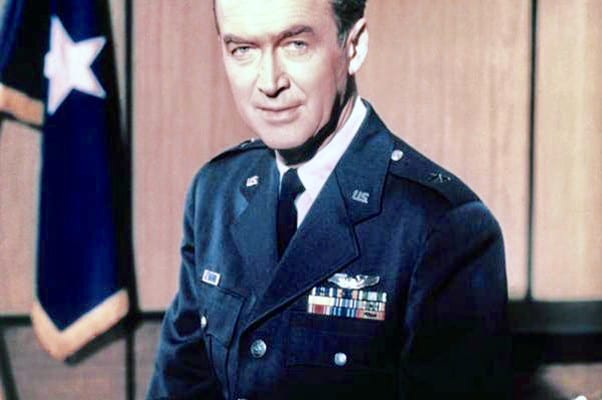
It is about the vivid memory of a privately rebuilt P-51 from WWII and its famous owner/pilot.
In the morning sun, I could not believe my eyes. There, in our little airport, sat a majestic P-51. They said it had flown in during the night from some US airport on its way to an air show. The pilot had been tired, so he just happened to choose Kingston for his stopover.
It was to take to the air very soon. I marveled at the size of the plane, dwarfing the Pipers and Canucks tied down by her. It was much larger than in the movies. She glistened in the sun like a bulwark of security from days gone by.
The pilot arrived by cab, paid the driver, and then stepped into the pilot's lounge. He was an older man; his wavy hair was gray and tossed. It looked like it might have been combed, say, around the turn of the century. His flight jacket was checked, creased, and worn - it smelled old and genuine. Old Glory was prominently sewn to its shoulders. He projected a quiet air of proficiency and pride devoid of arrogance.
He filed a quick flight plan to Montreal ("Expo-67 Air Show") and then walked across the tarmac.
After taking several minutes to perform his walk-around check, the tall, lanky man returned to the flight lounge to ask if anyone would be available to stand by with fire extinguishers while he "flashed the old bird up, just to be safe."
Though only 12 at the time, I was allowed to stand by with an extinguisher after brief instruction on its use -- "If you see a fire, point, then pull this lever!" he said. (I later became a firefighter, but that's another story.)
The air around the exhaust manifolds shimmered like a mirror from fuel fumes as the huge prop started to rotate. One manifold, then another, and yet another barked -- I stepped back with the others. In moments, the Packard-built Merlin engine came to life with a thunderous roar. Blue flames knifed from her manifolds with an arrogant snarl.
I looked at the others' faces; there was no concern. I lowered the bell of my extinguisher. One of the guys signaled to walk back to the lounge. We did.
Several minutes later we could hear the pilot doing his pre-flight run-up. He'd taxied to the end of runway 19, out of sight. All went quiet for several seconds. We ran to the second-story deck to see if we could catch a glimpse of the P-51 as she started down the runway. We could not. There we stood; eyes fixed on a spot halfway down 19.
Then a roar ripped across the field, much louder than before. Like a furious hell spawn set loose -- something mighty this way was coming. "Listen to that thing!" said the controller.
In seconds, the Mustang burst into our line of sight. Its tail was already off the runway, and it was moving faster than anything I'd ever seen by that point on 19.
Two-thirds the way down 19 the Mustang was airborne with her gear going up. The prop tips were supersonic. We clasped our ears as the Mustang climbed hellishly fast into the circuit to be eaten up by the dog-day haze. We stood for a few moments in stunned silence, trying to digest what we'd just seen.
The radio controller rushed by me to the radio. "Kingston tower calling Mustang?" He looked back to us as he waited for an acknowledgment. The radio crackled, "Go ahead, Kingston." "Roger, Mustang. Kingston Tower would like to advise the circuit is clear for a low-level pass." I stood in shock because the controller had just, more or less, asked the pilot to return for an impromptu air show! The controller looked at us. "Well, What?" he asked. "I can't let that guy go without asking. I couldn't forgive myself!"
The radio crackled once again, "Kingston, do I have permission for a low-level pass, east to west, across the field?" "Roger, Mustang, the circuit is clear for an east-to-west pass." "Roger, Kingston, I'm coming out of 3,000 feet, stand by."
We rushed back onto the second-story deck, eyes fixed toward the eastern haze. The sound was subtle at first, a high-pitched whine, a muffled screech, a distant scream. Moments later the P-51 burst through the haze. Her airframe straining against positive G's and gravity. Her wing tips spilling contrails of condensed air, prop-tips again supersonic. The burnished bird blasted across the eastern margin of the field shredding and tearing the air. At about 500 mph and 150 yards from where we stood, she passed with the old American pilot saluting. Imagine. A salute!
I felt like laughing; I felt like crying; she glistened; she screamed; the building shook; my heart pounded. Then the old pilot pulled her up and rolled, and rolled, and rolled out of sight into the broken clouds and indelible into my memory.
I've never wanted to be an American more than on that day! It was a time when many nations in the world looked to America as their big brother. A steady and even-handed beacon of security who navigated difficult political water with grace and style; not unlike the old American pilot who'd just flown into my memory. He was proud, not arrogant, humble, not a braggart, old and honest, projecting an aura of America at its best.
That America will return one day! I know it will!
Until that time, I'll just send off this story. Call it a loving reciprocal salute to a Country, and especially to that old American pilot: the late JIMMY STEWART (1908-1997), Actor, real WWII Hero (Commander of a US Army Air Force Bomber Wing stationed in England), and a USAF Reserve Brigadier General, who wove a wonderfully fantastic memory for a young Canadian boy that's lasted a lifetime.
PLEASE GOD, MAKE AMERICA GREAT AGAIN….AS SOON AS YOU CAN!
"A veteran, whether active duty, or retired, is someone who, at one point in his or her life, wrote a blank check made payable to "The United States of America," for an amount of "up to, and including their life." That is Honor, and there are way too many people in this country who no longer understand that.
Sunday, April 30, 2023
The Opening of the 2023 Season
Number 33 (Year) got started this past week at FDIC. I was honored by attendees such as Steve Schwartz, CEO and co-owner of Lion Protects, the longest sponsor of the Firefighter Challenge. He was followed by John Granby, who recently retired from Lion.
Over the next couple of months, you will get the inside scoop on the origins of the Challenge. There’s some background on Wikipedia - and that post needs updating and more accuracy. I don’t know who started that thread, but it was a good start.
The Challenge got its start when Chief David Gratz and Dr. Leonard Marks walked into the Human Performance Lab at the Sports Medicine Center at the University of Maryland and asked, “Can you determine what it takes to climb a ladder and ventilate a roof with an axe?”
The answer was “Yes.”
Back to Indy, 49 years later.
Here are Steve Schwartz’s remarks on the Firefighter Challenge course Wednesday, April 25, 2023:
Steve:
Lion and I have had the honor and privilege of supporting the Challenge since its inception. My uncle Richard Lapedes, Lion’s previous CEO, believed in honoring Firefighters’ toughness and bravery while encouraging them to possess athletic strength and agility.
At first, LION was a sponsor, but it soon became apparent that LION should step up to the plate and be more than “a sponsor” because the Challenge’s purpose was consistent with LION’s purpose to keep firefighters ready for action.
In the late 90s, I became involved in the LION fire service business, and the story begins for me and my relationship with the Challenge and Paul.
I committed LION to transform our relationship from a sponsor to a true partner of On Target and helped to add stability to the Challenge as it grew to what it is today. The five evolutions that Paul created for the Challenge replicate the physical and mental demands of daily firefighting and, in some cases, the extreme extra efforts required to be a firefighter performing at the highest level.
We took the extra step to create the LION’s Den to honor the highest performers who complete the Challenge in less than 3 minutes.
We are proud of our exceptional commitment to the Challenge. We are thrilled that, as we stand here today, we see a new, invigorated, and, we believe, even more exciting, competitor-friendly course set inside the LION Arena of the Brave.
So let me conclude my remarks by honoring Paul. I have seen Paul 2-3 times a year for the last 23 years, with some phone calls between personal visits. Since the Challenge started coming to Indy, I always saw him here. Paul’s enthusiasm for the Challenge was always so vibrant it felt like a crusade. That enthusiasm was so infectious. Paul had such a single-minded focus on the Challenge.
Every time we met, he shared his latest ideas on how to market it and new ways to attract more participants. He was never ready to give up or lose hope in spreading the challenging gospel. He is a man of great integrity who has faced challenges in his own life that give him the humility all great leaders possess.
Thank you, Paul, for the Challenge, your life’s work. As Theodore Roosevelt said, “Far and away, the best prize that life offers is the chance to work hard at work worth doing. “Paul you have lived that life to the fullest.
John Granby:
It was only fitting that LION became part of this incredible and grand Challenge as, at its core, LION has always believed in showcasing the physical and mental demands of the Firefighter as well as promoting the health and safety of the Firefighter. Being physically fit is one of the 16 core life initiatives of the National Fallen Firefighters Foundation. This event helps to highlight the need for all firefighters to be physically fit and healthy.
It is a way for LION to “give back” to the fire service and its 1.1 million active firefighters, to help them become even better physically and mentally and, in turn, help protect the communities they serve and promote the value of the fire service.
LION has always been at the forefront of the health and safety of Firefighters. He has always tried to develop the lightest, safest, and most functional Turnout gear, station uniforms, and training equipment for the fire service.
Talk about stories about Paul – what Paul meant to you-
As we stand here today and introduce everyone to the improved Challenge course, we are sure that a new chapter has begun. We believe that the new look of the system and the new direction that it has taken will only enhance and increase the legacy that Paul created in the 30-plus years that proceeded this new and improved course. We know that the look, energy and direction we propel this fantastic event well into the future. We hope that with all that is being done, this event will further the health and safety of all firefighters.
Friday, April 7, 2023
Sometimes it's interesting to go back in time and look at the news...
“Yet for a variety of reasons, both personal and civic, their characters not only should not be altered, but could not be, even if the tragic hero wished to change, given his megalomania and absolutist views of the human experience. In the classical tragic sense, Trump likely will end in one of two fashions, both not particularly good: either spectacular but unacknowledged accomplishments followed by ostracism when he is out of office and no longer useful, or, less likely, a single term due to the eventual embarrassment of his beneficiaries, as if his utility is no longer worth the wages of his perceived crudity.” —The Case for Trump (2019)
After the midterms, the Republican Party and half of the conservative movement are now furious with Donald Trump. Their writs are many—even though the party establishment shares much of the blame. More importantly still, American elections have radically shifted to mail-in/early/absentee voting rendering Election Day a minor event. The predictable result is that any close race undecided on Election Day in subsequent days usually is won by the Democrats.
On the eve of the midterm, Trump gratuitously attacked Florida Governor Ron DeSantis, who was up for reelection, while all but announcing he would run for president.
That preview could have waited until the elections had passed. The pizzazz may have galvanized some Trump-haters to go to the polls. It might even have alienated perhaps a few thousand DeSantis Republicans who were not thus inclined to vote for Trump-stamped candidates.
Trump’s frantic fundraising efforts had amassed a huge sum in his PAC, geared to his future primary fights. But many felt he was far too parsimonious in spreading his largess to his own cash-strapped and outspent MAGA candidates. That stinginess might have helped contribute to their defeats in close House and Senate elections.
Those earlier rumblings were only amplified after the unexpectedly anemic Republican midterm performance. Trump sent out a disjointed, almost unhinged letter damning DeSantis as disloyal, without gratitude (to Trump), mediocre, and overrated.
The indictment was ill-timed to DeSantis’ landslide victory over Charlie Crist. DeSantis’ long Florida coattails fueled the only red tsunami of the entire evening. If Trump thought he would employ the battering-ram tactics of his first presidential debate of 2020, then he should remember they failed (in contrast to his effective second debate against Biden). And in reaction, DeSantis’ rope-a-dope silence is effectively designed to let Trump punch his way out and down to the low 30s in approval.
Trump further blamed some of the losses of his endorsed candidates on either their own shortcomings and lack of loyalty, or the bad advice from those who had persuaded him to back losers. New Hampshire U.S. Senate candidate Don Bolduc was deemed insufficiently denialist and so, according to Trump, was crushed in the New Hampshire race.
Former First Lady Melania Trump, of all people, was reportedly to blame for convincing the ex-president to back Mehmet Oz in the Pennsylvania U.S. Senate race.
Yet Oz turned out to be a tireless worker and a rookie but solid candidate. Still, he was easily outspent—and was fatally injured by the balloting blowback against the mediocre Trump-supported gubernatorial candidate Doug Mastriano. The latter’s wipeout injured Oz and Republican congressional candidates once thought likely to win.
Worse still, Trump highlighted his self-obsession over party concerns by weirdly celebrating the loss of fellow Republican senatorial candidate Joe O’Dea of Colorado. His RINO crime was spurning Trump’s support. Stranger still, Trump attacked popular Virginia Governor Glenn Youngkin for supposedly having a “Chinese”-sounding name.
But these were sins of commission. There were also those of omission. Trump had not issued an ecumenical call to head to Georgia, to forget intramural squabbles, and to rally money and time on behalf of Herschel Walker—Trump’s own endorsed candidate.
Even if the Senate is now lost, Trump should issue such a call—if keeping his person clear of the Georgia mess. In 2021 his loud whines to supporters that Georgia’s voting was rigged kept his base home, while offending swing independents.
That one-two punch ensured the surreal victories of two neo-socialist Democratic senators, Raphael Warnock and Jon Ossoff. The duo ensured Democratic control of the entire Congress, guaranteeing the disastrous first two years of the Biden Administration. It takes effort to ensure that Georgia now hosts the two most radically left-wing senators in the entire Senate.
Even before the midterms, there was a latent feeling among half of Republicans that Trump, given his age, and the animus he incurs among the rich Left and touchy independents, might retire to the role of kingmaker, rather than try a third presidential election. Trump’s eruptions, coupled with DeSantis’ stunning and singular midterm success, ensured that such prior latent conservative unease is now overt.
Indeed, in near hysterical fashion, Trump became stigmatized and scapegoated as the culprit for nearly every Republican race lost. Yet many of his endorsed candidates won. And some who lost did so quite independently of anything Trump said or did. Tiffany Smiley, Tudor Dixon and Lee Zeldin were good candidates and their opponents feeble. But not even Abraham Lincoln could have gotten them elected in bright blue Washington, Michigan, and New York.
On the other hand, there were also lots of RNC-approved candidates who likewise lost narrow races. And Senator Mitch McConnell sent millions of dollars to RINO Senator Lisa Murkowski (R-Alaska) to defeat fellow Republican and genuine conservative Kelly Tshibaka, more to protect McConnell’s own leadership role than to ensure a more reliable Republican vote in the Senate.
As the disappointment over a red ripple began to subside, many found some long-term good: the winner Ron DeSantis was empowered. The now cocky but still demented Joe Biden is delusional, convinced he could be a winner in 2024, And Donald Trump now must either settle down or settle up.
An unspoken paradox arose among many that Trump’s vital MAGA agenda might be better continued and advanced by those others than its creator—even as Trump insisted that there can no more be a MAGA party without him than there could be sunshine without the sun.
Trump Considered
One explanation of the Trump dilemma is that like all classical tragic heroes and western gunslingers, Trump solved problems through means unpalatable to those in need of solutions beyond their own refinement. It is the lot of such tragic figures to grate and wear out their welcome with their beneficiaries—but only after their service is increasingly deemed no longer needed.
In this moment of wishing the wounded Shane would ride off into the Tetons and leave the more civilized alone, we should remember Trump’s four historical accomplishments that will only grow in light of Biden’s subsequent disastrous four years.
One is partisan. Trump utterly destroyed the 30-year Clinton grifting and quid pro quo machine in general, and Hillary Clinton’s endless and often toxic political career in particular. It was characterized by the despicable Uranium One sale, the foreign shake-down contributions to the Clinton Foundation, her destruction of subpoenaed emails and devices, and her blatant violation of State Department rules of personal communications.
Clinton’s failing campaign and eventual collapse in 2016 was so shocking that it all but crushed her very psyche—to the point that she had funded a foreign ex-spy to systematically and illegally destroy her political opponent. She ended up denying the very legitimacy of the election she lost. Then she topped that off by urging Joe Biden not to accept the 2020 verdict should he lose the popular vote.
Hillary Clinton is physically, psychologically, and spiritually spent—and never recovered from her ill-fated collisions with Donald Trump.
Two, Donald Trump recalibrated the Republican Party to become more populist and nationalist. Previously it was shrinking and offered the Left an easy stereotype of a small club of aristocratic white corporate elites.
Yet Trumpism did not renounce prior Republicanism, at least not entirely. Rather, Trump sought to save it by recalibrating the party. He demanded toughness with China, attacked illegal immigration, addressed the crisis of the deindustrialized American interior, and adopted a Jacksonian foreign policy. That was all in addition to embracing Republican policies of low-taxes, small-government, deregulation, traditional values, and originalist justices.
Three, Trump’s actual four years of governance were characterized, before the advent of the pandemic, by robust growth, low inflation, energy independence, low unemployment, a rebuilding of the U.S. military, eventual curbing of illegal immigration, the Abraham Accords, and forcing NATO to spend far more on defense. Trump saved the Supreme Court and lower federal courts for a generation.
Four, in his furious counterassault against a vicious administrative state, bankrupt media, and crazed elite bicoastal class, Trump survived and ended up exposing and discrediting them all. Harvard’s Shorenstein Center, which monitors media coverage, found that after just a few months in office, Trump was the subject of the most biased coverage in modern presidential history.
While the media both thrived on him and yet sought to ruin their greatest source of income, it committed suicide through its hysteria and fixations. Trump’s “fake news” attacks were crude. But they resonated precisely because he was correct that the media had become utterly corrupt and a mere extension of the progressive project.
Trump in his current state is an object of derision. But that he is still standing is a miracle in itself, given the abuse he endured that was predicated on lies, myths, and venom. In the first year of his presidency, partisan House members filed articles of impeachment. Foreign Policy printed an essay 11 days after his inauguration calling for his removal through either impeachment, the 25th Amendment, or a military coup.
It became a progressive parlor game to publicly dream of his assassination by explosion, decapitation, stabbing, incineration, hanging, or shooting. Joe Biden on three occasions bragged of his desire to physically beat him up.
That fisticuffs trope was amplified by everyone from Cory Booker to Robert De Niro. His National Security designate, General Michael Flynn, was framed by the efforts of the FBI and remnants of the Obama Justice Department through an ambush interrogation aimed at reviving the ossified Logan Act.
For nearly three years he was smeared and slurred as a Russian collaborator. That was a false charge and it devoured 22 months of his presidency, until the Mueller investigation imploded. Frenzied leftist hysterics followed this implosion. His first impeachment remains a stain on democracy.
Trump, remember, did not cancel aid to Ukraine. He was prescient in warning about the serial corruption of Hunter Biden and his father’s family syndicate. He was far tougher on Vladimir Putin (greater sanctions, flooding the world with cheap oil, leaving a flawed missile treaty, hammering Russian mercenaries in Syria, sending offensive weapons to Ukraine that Obama-Biden had forbidden, beefing up military spending, etc.) than his predecessor. Putin did not invade other countries under Trump’s tenure, unlike during prior and subsequent administrations.
In its politicized efforts to get Trump, the FBI blew up its reputation as a competent, professional, and disinterested investigatory bureau. A good argument can be made that three consecutive directors, Mueller, Comey, and McCabe, either under oath misled a House Intelligence Committee inquiry or simply flat-out lied. Retired four-star generals systematically violated the Uniform Code of Military Justice with impunity as they slandered their commander-in-chief variously as Nazi-like, a Mussolini, or analogous to the architects of Nazi death camps.
Congressional representatives grew so desperate to end Trump’s presidency that they called in a hack Yale psychiatrist to declare him, quite unprofessionally and without an examination, non compos mentis and deserving of forced removal from office. Do we remember “Anonymous” who bragged in the New York Times of a covert and concerted effort inside his administration to destroy it?
A common denominator with all his critics—Hillary Clinton, James Comey, Dr. Bandy X. Lee, the CNN cadre, Andrew McCabe, Robert De Niro, Adam Schiff, Howard Stern, Peter Strzok, and a host of others—was that their anti-Trump obsessions either diminished their careers or empowered Trump, or both.
In response to all this, and often in preemptive fashion, Trump became obsessed with the historic injustice of it all. He yelled to high heaven that the Russian collusion charge was an utter hoax. He hammered the message that the COVID pandemic never originated naturally in a wet market but was birthed in a Wuhan virology lab. He screamed that the Hunter Biden laptop was authentic and a window into the Biden family’s systemic and lucrative corruption. Trump was right on all these counts, but, like mythical Cassandra, the more he rattled off the truth, the less likely he was to be believed given the coarseness of his protestations.
To push through his agenda, and to strike back at the Democratic-media fusion, Trump stooped to battle nonstop with minor and irrelevant enemies—and often his own allies. He wrongly encouraged January 6 demonstrations at the Capitol at a time of volatile passions—missing the story of the 2020 election that was lost far earlier in the spring through altered voting laws.
We will never quite know why the media became obsessed with Trump to the point that it is now a mere caricature of its former self. Was it Trump’s supposed crudity, both physical and vocal, that so shocked their sensibilities, from his orange hue and combover flop to his Queens accent? Was it MAGA estrangement from both Republican and Democratic hierarchies? Was it his deplorable base that had earned an entire vocabulary of hatred from the Obama-Clinton-Biden nexus (clingers, deplorables, dregs, chumps)? Or was it Trump’s own Ethan Edwards-like 360-degree, 24/7 constant obsessive combativeness?
After all, it was not Trump but his enemies who weaponized the CIA, FBI, and Justice Department. Trump, unlike Obama, did not spy on journalists. And unlike Biden, he created no ministry of truth. His supporters did not call to junk the Electoral College, pack the court, destroy the filibuster, or opportunistically add two new states. They did not radically change the voting laws through means that undermined the authority of state legislatures to end Election Day as we had known it for over three centuries. They did not turn balloting into mostly a mail-in/early voting phenomena that saw the usual rejection rate of ballots plummet even as the number of non-Election Day ballots soared.
So, Kingmaker, Scapegoat, or Outlaw?
A good argument of “ifs” concerning Trump and the recent Republican midterms can be made: if he had stayed out of picking candidates; if he had helped all Republican candidates including those who opposed him; if at his rallies he had advanced positive “Commitment to America” solutions rather than litanies of his own past hurts and grievances; and if he now pivoted and raised money for the conservative agenda rather than having trashed rivals who nonetheless have advanced his shared cause.
By 2022 even hard conservatives thought Trump was expendable, his liabilities growing larger than his assets, his future potential deemed less than his past achievements, his don’t tread-on-me pushbacks to the Left overshadowed by his cul-de-sac and gratuitous spats with irrelevancies, and his former remarkable perseverance in the face of historic and unjust attacks overshadowed by his current preemptive squabbles.
So, will Trump rest on his considerable laurels and ride out gracefully to Mar-a-Lago? And there, as a kingmaker/elder statesman, will he work to institutionalize his MAGA agendas while raising money for any presidential candidate who embraces it?
Or will a subdued candidate Trump now pivot, grow quieter, and let the people vote in the primaries to decide whether they want him anymore—and whether Ron DeSantis sinks as a 2016 Scott Walker on the national stage (a similarly talented and successful governor), or assumes the mythical status of Ronald Reagan?
Or will an unapologetic Trump instead now escalate his slurs, bray at the moon, play out his current angry Ajax role to the bitter end, and thus himself end up a tragic hero—appreciated for past service but deemed too toxic for present company?
Subscribe to:
Posts (Atom)