
Timely thoughts and relevant information for fire-athletes...©, 2023
Saturday, February 25, 2023
Is air pollution causing us to lose our sense of smell?
Our sense of smell is one of our richest and wide-ranging windows into the world around us, but a threat in the air we breathe may be eroding our olfactory powers.
For many people, a bout of Covid-19 gave a first taste (or rather a lack of it) of what it is like to lose their sense of smell. Known as "anosmia", loss of smell can have a substantial effect on our overall wellbeing and quality of life. But while a sudden respiratory infection might lead to a temporary loss of this important sense, your sense of smell may well have been gradually eroding away for years due to something else – air pollution.
Exposure to PM2.5 – the collective name for small airborne pollution particles, largely from the combustion of fuels in vehicles, power stations and our homes – has previously been linked with "olfactory dysfunction", but typically only in occupational or industrial settings. But new research is now starting to reveal the true scale – and the potential damage caused by – the pollution we breathe in every day. And their findings have relevance for us all.
On the underside of our brains, just above our nasal cavities, lies the olfactory bulb. This sensitive bit of tissue bristles with nerve endings and is essential for the enormously varied picture of the world we get from our sense of smell. It's also our first line of defence against viruses and pollutants entering the brain. But, with repeated exposure, these defences slowly get worn down – or breached.
"Our data show there's a 1.6 to 1.7-fold increased [risk of] developing anosmia with sustained particulate pollution," says Murugappan Ramanathan Jr, a rhinologist at the Johns Hopkins School of Medicine, Baltimore. He has become one of the few experts in this field after he started to wonder if there was a link between the large numbers of patients he was seeing with anosmia and the environmental conditions where they lived.
The simple question he wanted to answer was this: were a disproportionate number of anosmia patients living in areas of higher PM2.5 pollution? Until recently, the little scientific research on this topic included one Mexican study in 2006, which used strong coffee and orange odours to show that residents of Mexico City – which often struggles with air pollution – tended to have a poorer sense of smell on average than people living in rural areas of the country.
With the help of colleagues – including environmental epidemiologist Zhenyu Zhang who created a map of historic air pollution data in the Baltimore area – Ramanathan set up a case-control study of data from 2,690 patients who had attended Johns Hopkins Hospital over a four year period. Around 20% had anosmia and most didn't smoke – a habit that is known to affect the sense of smell.
Sure enough, the levels of PM2.5 were found to be "significantly higher" in the neighbourhoods where patients with anosmia lived compared to healthy control participants. Even when adjusted for age, sex, race/ethnicity, body mass index, alcohol or tobacco use, the findings came up the same: "Even small increases in ambient PM2.5 exposure may be associated with anosmia".
The finding has been echoed in other parts of the world in studies published this year. One recent study in Brescia, northern Italy, for example, found the noses of teenagers and young adults became less sensitive to smells the more nitrogen dioxide – another pollutant produced when fossil fuels are burned, in particular from vehicle engines – they were exposed to. Another year-long study in São Paulo, Brazil, also indicated that people living in areas with higher particulate pollution had an impaired sense of smell.
But exactly how is pollution wrecking our ability to smell?
According to Ramanathan there are two potential routes. One is that some of the pollution particles are passing through the olfactory bulb and getting directly into the brain, causing inflammation. "Olfactory nerves are in the brain but they have little holes at the base of skull where little fibres go into the nose, [looking] almost like little pieces of angel hair pasta," says Ramanathan. "They are exposed."
In 2016, a team of British researchers found tiny metal particles in human brain tissue that appeared to have passed through the olfactory bulb. Barbara Maher, a professor of environmental science at Lancaster University in the UK who led the study, said at the time that the particles were "strikingly similar" to those found in airborne pollution next to busy roads (domestic fireplaces and log stoves were another possible source). Maher's study suggests that these nanoscale metal particles could, once in the brain, become toxic, contributing to oxidative brain damage that damages the neural pathways, although it still remains a theory.
The other potential mechanism, says Ramanathan, may not even require pollution particles getting into the brain. By hitting the olfactory bulb on an almost daily basis, they cause inflammation and damage to the nerves directly, slowly wearing them away. Think of it almost like coastal erosion, where sandy, salty waves eat away at the shoreline; substitute waves with pollution-filled air, and shoreline with our nasal nerves.
‟ Modern combustion methods can create nanoparticles so fine that they are small enough to directly enter our bloodstream and brain tissue
Unsurprisingly then, anosmia disproportionately affects older people, whose noses have been assaulted by air pollution for longer. More surprisingly, none of the Johns Hopkins patients lived in areas with excessively high air pollution – many lived in leafy areas of Maryland, and none were from pollution hotspots. It suggests that even low levels of air pollution could cause problems over a long enough period.
A similar recent study has separately been carried out by the Aging Research Center at the Karolinska Institute, in Stockholm. Postdoctoral researcher Ingrid Ekström was puzzled by findings from the early 2000s that showed more than 5.8% of adults in Sweden had anosmia, and 19.1% had some form of olfactory dysfunction. Knowing that anosmia rates were higher in older people, Ekström and colleagues designed a study using 3,363 patients aged 60 and over. Using strongly scented "sniffing sticks" of 16 common household smells, participants received a score depending on the number they could correctly identify. As with the Baltimore study, the participants' home addresses were mapped and analysed according to municipal air pollution readings. And as in Baltimore, there was a strong correlation between higher pollution levels and poorer smelling ability.
"They have been subjected to pollution throughout their lives," says Ekström. "We don't know exactly when their olfactory impairments started to decline.” But she is “confident” that long-term exposure to pollution was the cause, even at low levels.
In 2021, The World Health Organization (WHO) changed its health-based guidelines for a maximum annual average exposure to PM2.5, reducing it from 10 to 5 micrograms per cubic metre (µg/m3). Stockholm, Sweden's capital, is one of the few major cities in the world that manages to stay below this level with an annual average of 4.2µg/m3. By comparison, Islamabad, in Pakistan, has an annual average PM2.5 levels of 41.1µg/m3 while it is 42.3µg/m3 in Bloemfontein, South Africa.
This arguably makes the Stockholm findings even more relevant – if even Stockholm residents are having their senses eroded by low levels of pollution, then how much worse will it be in regions with high levels?
It is also a reminder of how highly localised pollution can be, both outdoors and indoors. People's cooking methods and heating choices may be exposing them to higher levels than their neighbours. (Listen to learn how effective air purifiers are.)
Meanwhile modern combustion methods from vehicle engines to the latest 'eco' wood stoves can create nanoparticles so fine that they barely register on PM2.5 readings, but are small enough to directly enter our bloodstream and brain tissue.
Air pollution is known to cause a quarter of all deaths from heart disease and stroke, and nearly half of all deaths from lung disease. By comparison, perhaps, our sense of smell seems low down the list of concerns. But both Ramanathan and Ekström warn that we underestimate the importance of smell at our peril.
Ekström's research speciality is dementia. And anosmia may be an early warning sign.
"With dementia and especially with Alzheimer's Disease, we assume that [the] disease progression is actually starting several decades before we can see the first symptoms," says Ekström.
Anosmia is one of the first symptoms. By the time Alzheimer's is diagnosed, "almost 90% of patients have anosmia", says Ekström. The exact link remains unknown, but one theory is that "environmental toxins enter the central nervous system via the olfactory bulb and cause damage, triggering this cascade effect that may ultimately lead to neuro-degeneration". The Maher Lancaster study, for example, found that metal nanoparticles were directly associated with the formation of 'senile plaques' – lesions on the brain and one of the neuropathological hallmarks of Alzheimer's disease and dementia.
Despite such strong links, Ekström argues it is only recently that researchers have "opened their eyes to the olfactory sense" and its role in disease.
Loss of smell has bee
n linked to increased likelihood of depression and anxiety in various studies, and is known to play a role in obesity, weight loss, malnutrition and cases of food poisoning. The reasons are perhaps obvious – our noses play a key role in our experience of the world around us, affect our ability to taste food and help us avoid meals that have gone off.
A poor sense of smell may mean that sufferers are likely to seek out stronger tasting food, which is very often salty and fatty. By contrast, a total loss of smell can put people off food and lose enjoyment from it, ultimately becoming underweight – a particular problem amongst the elderly.
Ramanathan has seen many patients who "can't taste food, can't smell their wine, the things that gave them pleasure in life". He recalls one patient who was a professional sommelier, for whom developing anosmia was both personally and professionally devastating.
Smell and taste are also linked to memory. "People don't remember what that pastry looked like that they ate in France, but they remember what the shop smelled like", says Ramanathan. Re-experiencing a particular smell can transport our memories straight back to that moment in pastry shop. This raises the question – albeit yet to be properly studied – whether the inverse could also true, and no longer being able to smell could impair our ability to create new memories in the same way.
Anosmia could also be an indicator of other, wider health issues. Numerous studies, typically of smokers – for whom smell impairment persists even 15 years after quitting – have shown that olfactory dysfunction is significantly associated with increased mortality among older adults. One particular study even hypothesised that anosmia could be used as a predicator for greater likelihood to die – from any cause – amongst older adults over a five-year-period. In a study of 3,005 US adults aged 57 to 85, those with anosmia were found to be four times more likely to die than their peers five years later. The researchers concluded that deteriorating sense of smell could be a "bellwether" for the accumulation of toxins from the environment or slowed regeneration of cells.
So, should we care that air pollution – to which we are all exposed – is impairing our sense of smell and causing anosmia? Clearly, the answer lies somewhere between "yes" and "hell yes".
Ramanathan, for whom traffic pollution and waste incinerators top the local pollution concerns in Baltimore, says "air quality matters". "I think we need tight regulations and control," he says. Many people may not even realise the pollution they are exposed to, so they rely on politicians regulating it to protect the populations in the surrounding areas.
"This is one of many [pollution-related] conditions," adds Ramanathan. "But this is kind of a special one, right? If you have COPD [chronic obstructive pulmonary disease] you could probably still enjoy your glass of wine. But not with this one."
Ekström says tackling air pollution is not simple. World events can also cause unexpected shifts in behaviour – Ekström mentions anecdotally that winter wood burning has been on the rise in Stockholm as worried residents wean themselves off Russian gas. But even the every-day, low-level air pollution we are exposed to “should be taken more seriously", she says. And what's more, “olfactory impairment should definitely be taken more seriously”, too.
* Tim Smedley is author of Clearing The Air: the Beginning and the End of Air Pollution, published by Bloomsbury.

Friday, February 3, 2023
Want to live to be 100? Here’s what experts recommend.
Want to live to be 100? Here’s what experts recommend.
The recent death of the world’s oldest person at age 118 highlights the growing number of centenarians around the world
Teddy AmenabarJanuary 25, 2023 at 12:50 p.m. EST
A woman turning 100 blows out her birthday candles. (iStock)
Experts predict that the number of centenarians — people who live to be at least 100 years old — will continue to rise in the coming decades. While genetics play a large role in healthy aging, physical activity, social support and where you live also can influence your chances for living a very long life.
Sister André, a French Catholic nun born Lucile Randon, who was the world’s oldest living person, recently died at the age of 118. Now the two oldest living people are believed to be María Branyas Morera, a 115-year-old Spanish woman born in the United States, and Fusa Tatsumi, who lives in Osaka, Japan, who is also 115 but 52 days younger than Morera, according to a database by the Gerontology Research Group.
Based on a 2022 estimate by the United Nations, there are 593,000 centenarians around the world. It’s a fast-growing age group. The United Nations projects there will be 3.7 million centenarians alive by 2050.
Did you win the genetic lottery?
Experts who study the expanding human life span say the reason someone may live beyond 100 years starts with their DNA — the genes they’ve inherited from their parents.
“You can’t make it out that far without having already won the genetic lottery at birth,” said S. Jay Olshansky, a professor of public health at the University of Illinois at Chicago. “So, rule number one is going to be genetics.”
The longer your parents live, the more likely you’ll live a healthier, longer life, experts say. Luigi Ferrucci, the scientific director at the National Institute on Aging, said the children of centenarians typically live healthier, longer lives than their peers.
“It’s probably not one single gene but a profile, a combination of genes,” Ferrucci said.
Living to 100 complicates retirement
Nir Barzilai, the director of the Institute for Aging Research at the Albert Einstein College of Medicine in the Bronx, has studied the lives of hundreds of centenarians, the people they’ve married and their kids. The children of centenarians are “about 10 years healthier” than their peers, Barzilai said.
Barzilai is working with others to enroll 10,000 centenarians, their children and a control group from the general population to identify the different genes that contribute to a long life. People who have a certain mutation on their growth hormone, for example, are “very likely to live longer” because their cells spend more energy on maintaining existing cells, not growing new ones, Barzilai said.
The plan is to use artificial intelligence to help find the genes and develop drugs from them, he said.
“We really want to find all the longevity genes,” Barzilai said.
Olshansky said he and his colleagues are preparing to launch a platform in February where people can upload data from a genetic testing service to identify whether they have genes “associated with exceptional longevity,” so they can plan financially for retirement.
“I’m a carrier, for example, of two sets of genes that are associated with longevity,” Olshansky said. “For planning purposes, I probably need to delay retirement.”
Environment and lifestyle count
Experts disagree on how much genetics influence a person’s life span vs. their lifestyle. But most experts say that good genes will only get you so far.
Jamie Justice, an assistant professor of gerontology at Wake Forest University, says some research has suggested that genetics account for around 25 percent of longevity. The other 75 percent relates to your environment — where you live, what you eat, how often you exercise and your support system through friends or family.
For those of us who are not endowed with a set of promising genes, the goal isn’t to push the boundaries of human life expectancy, Justice said. Instead, researchers want to figure out how people can have full, healthy lives with the time they have.
“The goal isn’t necessarily to live to 118 years. It’s to live well within those years,” Justice said. “What individual things do we do that we can really harness our health and live healthier within the years given?”
And, Justice said, a good public health system “can’t be undersold.” If you have a better health-care system, you’re going to have a higher life expectancy, she said.
The world’s oldest person record stood for decades. Then came a Russian conspiracy theory.
And location matters, too
The United States and Japan have the most confirmed centenarians and supercentenarians, people who live to be 110 years old or older; and, Japan has the most per capita, according to Robert Young, the director of supercentenarian research at the Gerontology Research Group.
But, there are probably more centenarians and supercentenarians we don’t know about. More than 110 years ago, certain countries were better at creating and preserving birth certificates or hospital records, Young said. A country’s record-keeping a century ago is often the factor determining where confirmed supercentenarians are reported across the world, he said.
“People need to remember that when we’re looking at human longevity today, we’re actually looking more at the state of the world 110-plus years ago,” Young said.
Beyond record-keeping, where someone lives — a war zone, a place with access to quality health care, a country with a lot of pollution, a developed nation where people sit a lot — probably plays a significant role in longevity.
Researchers have recently found “the stress of life directly affects some of the biological mechanisms of aging,” said Ferrucci, adding that our exposure to various types of pollution can harm our overall health, as well. He called the topic an “expanding area of research” that could revolutionize how we approach public health.
“We are discovering that the secret of good health is not only in our behavior but it’s also in what our society does to enhance the health of our population,” Ferrucci said.
And, from studying centenarians, Ferrucci said researchers have found that healthy older adults tend to be remain physically active, spend time outside and have strong connections with their friends and family.
“Just walking outside,” makes an enormous difference, Ferrucci said.
“If I had a jewel to give to people who want to live long and well, I would tell them to get up early in the morning and go out,” Ferrucci said. “That is really the best gift that you can give yourself if you want to achieve longevity.”
Still, Ferrucci said centenarians and especially supercentenarians are often “unique.” Some people have this “biological resilience” to live a long life despite everything going against them.
“There’s the curve of mortality that characterizes the general population and then there are these individuals that are unique singularities,” Ferrucci said. “We don’t know how and that is the great secret.”
Experts say the usual advice of regular exercise and eating healthy food applies generally to all aging adults, but for a few centenarians, there are exceptions to the rule. Barzilai once visited a centenarian, and when she opened the door, she was smoking a cigarette.
“I said, ‘Helen, nobody told you to stop smoking?’ ” Barzilai said. “And she said, ‘You know, the four doctors who told me to stop smoking? They all died.”
Tuesday, January 31, 2023
For longevity, muscle strength may be as important as aerobic exercise
Washington Post January 31, 2023 - Ian McHanan
While aerobic exercise has long taken the lead in physical activity guidelines, researchers are finding that biceps curls and bench presses might be equally important for health and longevity.
Strength training — exercise that increases muscle strength by making muscles work against a weight or force (such as gravity) — was added to the 2010 Global Recommendations on Physical Activity for Health.
In a recent meta-analysis combining 16 studies and data from over 1.5 million subjects, muscle-strengthening activities were associated with almost a 20 percent lower risk of cardiovascular disease, cancer, diabetes, lung cancer and all-cause mortality.
“Strength training confers a host of health benefits independent of aerobic exercise,” said Daniel J. McDonough, a researcher at the University of Minnesota’s School of Public Health and co-author of a large study that looked at the effect of aerobic and muscle-strengthening exercise on mortality. Adding some muscle also improves physical fitness and bone mineral density and reduces the risk of musculoskeletal injury.
Running, swimming, playing soccer and other aerobic exercise do a lot for the cardiovascular system — our heart and blood vessels — but they don’t do much for overall muscle mass or strength.
Perhaps most important for health, studies have found that strength training improves the body’s response to insulin and, therefore, leads to better control of blood sugar after meals — which means a reduced risk of diabetes or insulin resistance, conditions that can harm the heart and cardiovascular system by thickening the heart wall and increasing arterial plaque formation.
Also, emerging evidence shows contracting skeletal muscles produce myokines, which are small strings of amino acids existing between muscles and the rest of the body that can help regulate various metabolic processes conducive to better cardiometabolic health, McDonough says. German researchers last spring reported that “by stimulating the skeletal muscle in a certain way, we can make use of this cross talk and improve health.”
Because aging and inactivity tend to reduce muscle mass, resistance training is even more crucial for older adults as it helps slow the natural loss of muscle mass with age, McDonough says. Reducing muscle loss with advanced age is crucial to maintaining independence and helping older adults stay active. This also lowers the risk of chronic disease from disability and inactivity.
Strength training appears to have positive effects on brain health and function, perhaps decreasing the risk of dementia and Alzheimer’s disease, experts say.
Michael Valenzuela is a researcher at the University of New South Wales and one of the leaders of a study that looked at the effect of resistance exercise on cognitive function and brain structure in 100 subjects with mild cognitive impairment. He found that strength training appeared to protect areas of the brain, specifically the hippocampus, normally targeted by Alzheimer’s.
That may give strength training a potential role in prevention of the disease, Valenzuela says. “We also found these changes mediated better general cognitive performance in those older people that did the training, so it was not just an incidental finding,” he says.
A 2022 study in JAMA Network Open based on the Canadian Longitudinal Study on Aging found that the presence of low muscle mass was associated with faster future cognitive function decline in adults at least 65 years old. The researchers theorized that greater muscle mass may result in more physical activity and cardiorespiratory fitness, which leads to more blood flow to the brain.
So how much strength training is enough?
The federal Physical Activity Guidelines for Americans recommends two or more strength-training sessions each week. Ideally, the sessions should include four to six different exercises that use as many muscle groups as possible (legs, hips, back, abdomen, chest, shoulders and arms). For each exercise, complete 10 to 12 repetitions two to three times.
"We found that just 1-3 hours per week of moderate exercise — brisk walking and/or vigorous aerobic exercise such as [high intensity interval training] training — and just 1-2 times per week of strength exercise substantially reduced the risk of death by all-causes,” McDonough says.
Given that walking to the bus or store counts, most people should be able to get in 60 minutes a week of aerobic exercise, McDonough says. And the two sessions of strength training doesn’t have to be at the gym, he adds. They can be with any form of resistance, such as gravity, hand weights, resistance bands, or even water bottles or cans from the cupboard, or hefting grocery bags.
So cardio or weights or both? If you’re looking to live longer, doing both is your best bet, experts say.
“We consistently found that the greatest health benefits, whether it was reduced risk of death or chronic diseases or improvement in risk factors like blood pressure or cholesterol, were seen among people who performed both types of exercise rather than one or the other,” said Angelique Brellenthin, an assistant professor of kinesiology at Iowa State University and co-author of a recent review article titled “Aerobic or Muscle-Strengthening Exercise: Which is Better for Health?”
The review found that while aerobic and muscle-strengthening exercise independently reduced the risk of death by all causes, people who hit the cardio and the weights realized the largest benefit, including an approximately 40 percent reduced risk of all-cause mortality and 50 percent reduced risk of cardiovascular disease mortality.
Tuesday, January 17, 2023
Ukraine’s resilience sets a global standard
THE Washington Post
 By Ishaan Tharoor
with Sammy Westfall
Ukraine’s resilience sets a global standard

A Ukrainian service member smokes next to an armored personnel carrier on a road in Kherson region, Ukraine, on Friday. (Anna Voitenko/Reuters)
A year ago, Ukrainian President Volodymyr Zelensky was a somewhat unpopular leader in Kyiv, viewed by his critics as a lightweight jokester. Now, in the wake of Russia’s February invasion, the wartime president is a global icon, a Ukrainian national hero, the world’s prolific video-conferencer and, yes, the least surprising figure in recent memory to receive the designation of Time’s Person of the Year.
The international admiration for Zelensky is ultimately about much more than the man himself. His stoicism and courage seem to project the spirit of a nation that has withstood the Russian onslaught for close to 10 months at a hideous cost in lives and resources. It’s now hunkering down for a possibly punishing winter, as Russia has carried out targeted strikes on the country’s energy infrastructure. At any given moment, by some measures, at least 2 million and as many as 10 million Ukrainians are living without electricity, plunged in a cold, enveloping darkness. As my colleagues reported, even then, many Ukrainians are not letting their Kremlin-inflicted woes darken their moods.
Since the conflict flared, Zelensky and his allies have insisted their battle is not simply a defense of their own territory, but of a larger civilizational struggle, pitting their liberal aspirations and fledgling democracy against the tyranny and authoritarianism embodied by Russian President Vladimir Putin’s Russia.
“We are dealing with a powerful state that is pathologically unwilling to let Ukraine go,” Zelensky told Time’s Simon Shuster, suggesting that the Kremlin could not countenance a Ukraine that rejected its sphere of influence. “They see the democracy and freedom of Ukraine as a question of their own survival.”
Zelensky echoed what he and many other Ukrainians have been saying for months, that they were fighting on the behalf of other democracies vulnerable to Russia’s predations: “If they devour us, the sun in your sky will get dimmer.”
On Tuesday, dozens of nations at an international conference in Paris rallied around Ukraine. They pledged more than $1 billion in additional aid to support Ukraine in the near term, including to help boost its battered energy grid and other aspects of its civilian infrastructure.

“Over $440 million of the total aid pledged is expected to be directed to Ukraine’s energy network. French officials said the final amount would likely rise,” my colleagues reported. “In a video address earlier on Tuesday, Zelensky urged the international community to make maintaining the country’s energy supply a priority, calling for over at least $850 million in aid for the sector.”
French President Emmanuel Macron hailed Ukraine’s “bravery and determination,” and said that the work of the conference in the French capital is “tangible evidence that Ukraine is not alone.”
Kyiv is still adamant that it needs more arms and weapons to repel Russia’s offensives and reclaim more of its lost territory. “Given the scale of the war and Russia’s unwillingness to accept the reality and withdraw from Ukraine, we will need to fight through the winter,” Ukrainian Foreign Minister Dmytro Kuleba told reporters. He added that Russia’s strikes on civilian targets and Ukraine’s energy infrastructure were a mark of its broader military failure.
“Such barbarism is Russia’s response to losing the war on the battleground,” Kuleba said. “They have suffered a number of humiliating defeats.”
Ukraine has also been on the receiving end of a mammoth flow of Western weapons and military aid. On Tuesday, my colleagues reported that the Biden administration was preparing to send the Patriot missile system — its most sophisticated air defense technology — to Ukraine.
Western support for Kyiv is holding, no matter the fears over war fatigue of many countries that were deepened by the wider economic impact of the war and the energy sanctions placed on Russia’s economy.
“Among the many miscalculations that Putin has made is his bet that the invasion of Ukraine would strain relations among his adversaries,” wrote German Chancellor Olaf Scholz in a recent op-ed for Foreign Affairs. “In fact, the reverse has happened: the EU and the transatlantic alliance are stronger than ever before.”
Thousands of miles away, officials from another country facing up to a revanchist neighbor are taking notes. The war in Ukraine has echoed in the island state of Taiwan, which is constantly in the shadow of China and subject to an escalating series of provocations from the mainland. The leadership in Beijing, not dissimilarly from Putin’s stance on Ukraine, views Taiwan as an illegitimate state bound to return to the Chinese fold.
To Taiwan, Ukraine’s defiance of Russia is a source of inspiration and a template for their own survival. “Ukraine showed very great determination to defend their territory and it’s clear that Ukrainians have a very resilient civil society, which helped resist invasion,” Taiwanese Deputy Foreign Minister Ming-Yen Tsai told me on the sidelines of a major international security conference in Halifax, Canada, last month. He added that watching Ukraine’s struggle has inspired Taiwan to implement major long-term military reforms, including extending the period of compulsory military service expected of its citizens.
While a Chinese maritime invasion of Taiwan would look very different than Russia’s land campaigns in Ukraine, Taiwanese officials have seized the moment as one to galvanize international support for their cause and sound the alarm over the challenges confronting them.
“We are already facing warfare without gun smoke on a daily basis,” Tsai said, pointing to China’s “hybrid warfare” tactics, its use of escalating forms of military intimidation through naval exercises and aerial incursions, as well as cyberstrikes and online disinformation campaigns.
“If we do not hold ground at this point,” Tsai said, “China will test the bottom line, step by step, to create a new normal, and step by step, keep changing the status quo” until Taiwan’s sovereignty will be all the more fragile.
The experience of Russia’s invasion of Ukraine, Tsai said, “shows that authoritarian countries have no qualms invading other countries’ territory, revising national borders and challenging the rules-based international order.” He added that, for Taiwan, the lesson is to prepare now for an invasion rather than when it’s too late.
By Ishaan Tharoorwith Sammy Westfall
Ukraine’s resilience sets a global standard
A Ukrainian service member smokes next to an armored personnel carrier on a road in Kherson region, Ukraine, on Friday. (Anna Voitenko/Reuters)
A year ago, Ukrainian President Volodymyr Zelensky was a somewhat unpopular leader in Kyiv, viewed by his critics as a lightweight jokester. Now, in the wake of Russia’s February invasion, the wartime president is a global icon, a Ukrainian national hero, the world’s prolific video-conferencer and, yes, the least surprising figure in recent memory to receive the designation of Time’s Person of the Year.
The international admiration for Zelensky is ultimately about much more than the man himself. His stoicism and courage seem to project the spirit of a nation that has withstood the Russian onslaught for close to 10 months at a hideous cost in lives and resources. It’s now hunkering down for a possibly punishing winter, as Russia has carried out targeted strikes on the country’s energy infrastructure. At any given moment, by some measures, at least 2 million and as many as 10 million Ukrainians are living without electricity, plunged in a cold, enveloping darkness. As my colleagues reported, even then, many Ukrainians are not letting their Kremlin-inflicted woes darken their moods.
Since the conflict flared, Zelensky and his allies have insisted their battle is not simply a defense of their own territory, but of a larger civilizational struggle, pitting their liberal aspirations and fledgling democracy against the tyranny and authoritarianism embodied by Russian President Vladimir Putin’s Russia.
“We are dealing with a powerful state that is pathologically unwilling to let Ukraine go,” Zelensky told Time’s Simon Shuster, suggesting that the Kremlin could not countenance a Ukraine that rejected its sphere of influence. “They see the democracy and freedom of Ukraine as a question of their own survival.”
Zelensky echoed what he and many other Ukrainians have been saying for months, that they were fighting on the behalf of other democracies vulnerable to Russia’s predations: “If they devour us, the sun in your sky will get dimmer.”
On Tuesday, dozens of nations at an international conference in Paris rallied around Ukraine. They pledged more than $1 billion in additional aid to support Ukraine in the near term, including to help boost its battered energy grid and other aspects of its civilian infrastructure.
“Over $440 million of the total aid pledged is expected to be directed to Ukraine’s energy network. French officials said the final amount would likely rise,” my colleagues reported. “In a video address earlier on Tuesday, Zelensky urged the international community to make maintaining the country’s energy supply a priority, calling for over at least $850 million in aid for the sector.”
French President Emmanuel Macron hailed Ukraine’s “bravery and determination,” and said that the work of the conference in the French capital is “tangible evidence that Ukraine is not alone.”
Kyiv is still adamant that it needs more arms and weapons to repel Russia’s offensives and reclaim more of its lost territory. “Given the scale of the war and Russia’s unwillingness to accept the reality and withdraw from Ukraine, we will need to fight through the winter,” Ukrainian Foreign Minister Dmytro Kuleba told reporters. He added that Russia’s strikes on civilian targets and Ukraine’s energy infrastructure were a mark of its broader military failure.
“Such barbarism is Russia’s response to losing the war on the battleground,” Kuleba said. “They have suffered a number of humiliating defeats.”
Ukraine has also been on the receiving end of a mammoth flow of Western weapons and military aid. On Tuesday, my colleagues reported that the Biden administration was preparing to send the Patriot missile system — its most sophisticated air defense technology — to Ukraine.
Western support for Kyiv is holding, no matter the fears over war fatigue of many countries that were deepened by the wider economic impact of the war and the energy sanctions placed on Russia’s economy.
“Among the many miscalculations that Putin has made is his bet that the invasion of Ukraine would strain relations among his adversaries,” wrote German Chancellor Olaf Scholz in a recent op-ed for Foreign Affairs. “In fact, the reverse has happened: the EU and the transatlantic alliance are stronger than ever before.”
Thousands of miles away, officials from another country facing up to a revanchist neighbor are taking notes. The war in Ukraine has echoed in the island state of Taiwan, which is constantly in the shadow of China and subject to an escalating series of provocations from the mainland. The leadership in Beijing, not dissimilarly from Putin’s stance on Ukraine, views Taiwan as an illegitimate state bound to return to the Chinese fold.
To Taiwan, Ukraine’s defiance of Russia is a source of inspiration and a template for their own survival. “Ukraine showed very great determination to defend their territory and it’s clear that Ukrainians have a very resilient civil society, which helped resist invasion,” Taiwanese Deputy Foreign Minister Ming-Yen Tsai told me on the sidelines of a major international security conference in Halifax, Canada, last month. He added that watching Ukraine’s struggle has inspired Taiwan to implement major long-term military reforms, including extending the period of compulsory military service expected of its citizens.
While a Chinese maritime invasion of Taiwan would look very different than Russia’s land campaigns in Ukraine, Taiwanese officials have seized the moment as one to galvanize international support for their cause and sound the alarm over the challenges confronting them.
“We are already facing warfare without gun smoke on a daily basis,” Tsai said, pointing to China’s “hybrid warfare” tactics, its use of escalating forms of military intimidation through naval exercises and aerial incursions, as well as cyberstrikes and online disinformation campaigns.
“If we do not hold ground at this point,” Tsai said, “China will test the bottom line, step by step, to create a new normal, and step by step, keep changing the status quo” until Taiwan’s sovereignty will be all the more fragile.
The experience of Russia’s invasion of Ukraine, Tsai said, “shows that authoritarian countries have no qualms invading other countries’ territory, revising national borders and challenging the rules-based international order.” He added that, for Taiwan, the lesson is to prepare now for an invasion rather than when it’s too late.
Wednesday, January 4, 2023
HARRISON BERGERON- a classic satire
by Kurt Vonnegut, Jr.
THE YEAR WAS 2081, and everybody was finally equal. They weren't only equal before God and the law. They were equal every which way. Nobody was smarter than anybody else. Nobody was better looking than anybody else. Nobody was stronger or quicker than anybody else. All this equality was due to the 211th, 212th, and 213th Amendments to the Constitution, and to the unceasing vigilance of agents of the United States Handicapper General.
Some things about living still weren't quite right, though. April for instance, still drove people crazy by not being springtime. And it was in that clammy month that the H-G men took George and Hazel Bergeron's fourteen-year-old son, Harrison, away.
It was tragic, all right, but George and Hazel couldn't think about it very hard. Hazel had a perfectly average intelligence, which meant she couldn't think about anything except in short bursts. And George, while his intelligence was way above normal, had a little mental handicap radio in his ear. He was required by law to wear it at all times. It was tuned to a government transmitter. Every twenty seconds or so, the transmitter would send out some sharp noise to keep people like George from taking unfair advantage of their brains.
George and Hazel were watching television. There were tears on Hazel's cheeks, but she'd forgotten for the moment what they were about.
On the television screen were ballerinas.
A buzzer sounded in George's head. His thoughts fled in panic, like bandits from a burglar alarm.
"That was a real pretty dance, that dance they just did," said Hazel.
"Huh" said George.
"That dance-it was nice," said Hazel.
"Yup," said George. He tried to think a little about the ballerinas. They weren't really very good-no better than anybody else would have been, anyway. They were burdened with sashweights and bags of birdshot, and their faces were masked, so that no one, seeing a free and graceful gesture or a pretty face, would feel like something the cat drug in. George was toying with the vague notion that maybe dancers shouldn't be handicapped. But he didn't get very far with it before another noise in his ear radio scattered his thoughts.
George winced. So did two out of the eight ballerinas.
Hazel saw him wince. Having no mental handicap herself, she had to ask George what the latest sound had been.
"Sounded like somebody hitting a milk bottle with a ball peen hammer," said George.
"I'd think it would be real interesting, hearing all the different sounds," said Hazel a little envious. "All the things they think up."
"Um," said George.
"Only, if I was Handicapper General, you know what I would do?" said Hazel. Hazel, as a matter of fact, bore a strong resemblance to the Handicapper General, a woman named Diana Moon Glampers. "If I was Diana Moon Glampers," said Hazel, "I'd have chimes on Sunday-just chimes. Kind of in honor of religion."
"I could think, if it was just chimes," said George.
"Well-maybe make 'em real loud," said Hazel. "I think I'd make a good Handicapper General."
"Good as anybody else," said George.
"Who knows better than I do what normal is?" said Hazel.
"Right," said George. He began to think glimmeringly about his abnormal son who was now in jail, about Harrison, but a twenty-one-gun salute in his head stopped that.
"Boy!" said Hazel, "that was a doozy, wasn't it?"
It was such a doozy that George was white and trembling, and tears stood on the rims of his red eyes. Two of the eight ballerinas had collapsed to the studio floor, and were holding their temples.
"All of a sudden you look so tired," said Hazel. "Why don't you stretch out on the sofa, so's you can rest your handicap bag on the pillows, honeybunch." She was referring to the forty-seven pounds of birdshot in a canvas bag, which was padlocked around George's neck. "Go on and rest the bag for a little while," she said. "I don't care if you're not equal to me for a while."
George weighed the bag with his hands. "I don't mind it," he said. "I don't notice it anymore. It's just a part of me."
"You been so tired lately-kind of wore out," said Hazel. "If there was just some way we could make a little hole in the bottom of the bag, and just take out a few of them lead balls. Just a few."
"Two years in prison and two thousand dollars fine for every ball I took out," said George. "I don't call that a bargain."
"If you could just take a few out when you came home from work," said Hazel. "I mean-you don't compete with anybody around here. You just sit around."
"If I tried to get away with it," said George, "then other people'd get away with it-and pretty soon we'd be right back to the dark ages again, with everybody competing against everybody else. You wouldn't like that, would you?"
"I'd hate it," said Hazel.
"There you are," said George. The minute people start cheating on laws, what do you think happens to society?"
If Hazel hadn't been able to come up with an answer to this question, George couldn't have supplied one. A siren was going off in his head.
"Reckon it'd fall all apart," said Hazel.
"What would?" said George blankly.
"Society," said Hazel uncertainly. "Wasn't that what you just said?
"Who knows?" said George.
The television program was suddenly interrupted for a news bulletin. It wasn't clear at first as to what the bulletin was about, since the announcer, like all announcers, had a serious speech impediment. For about half a minute, and in a state of high excitement, the announcer tried to say, "Ladies and Gentlemen."
He finally gave up, handed the bulletin to a ballerina to read.
"That's all right-" Hazel said of the announcer, "he tried. That's the big thing. He tried to do the best he could with what God gave him. He should get a nice raise for trying so hard."
"Ladies and Gentlemen," said the ballerina, reading the bulletin. She must have been extraordinarily beautiful, because the mask she wore was hideous. And it was easy to see that she was the strongest and most graceful of all the dancers, for her handicap bags were as big as those worn by two-hundred pound men.
And she had to apologize at once for her voice, which was a very unfair voice for a woman to use. Her voice was a warm, luminous, timeless melody. "Excuse me-" she said, and she began again, making her voice absolutely uncompetitive.
"Harrison Bergeron, age fourteen," she said in a grackle squawk, "has just escaped from jail, where he was held on suspicion of plotting to overthrow the government. He is a genius and an athlete, is under-handicapped, and should be regarded as extremely dangerous."
A police photograph of Harrison Bergeron was flashed on the screen-upside down, then sideways, upside down again, then right side up. The picture showed the full length of Harrison against a background calibrated in feet and inches. He was exactly seven feet tall.
The rest of Harrison's appearance was Halloween and hardware. Nobody had ever born heavier handicaps. He had outgrown hindrances faster than the H-G men could think them up. Instead of a little ear radio for a mental handicap, he wore a tremendous pair of earphones, and spectacles with thick wavy lenses. The spectacles were intended to make him not only half blind, but to give him whanging headaches besides.
Scrap metal was hung all over him. Ordinarily, there was a certain symmetry, a military neatness to the handicaps issued to strong people, but Harrison looked like a walking junkyard. In the race of life, Harrison carried three hundred pounds.
And to offset his good looks, the H-G men required that he wear at all times a red rubber ball for a nose, keep his eyebrows shaved off, and cover his even white teeth with black caps at snaggle-tooth random.
"If you see this boy," said the ballerina, "do not - I repeat, do not - try to reason with him."
There was the shriek of a door being torn from its hinges.
Screams and barking cries of consternation came from the television set. The photograph of Harrison Bergeron on the screen jumped again and again, as though dancing to the tune of an earthquake.
George Bergeron correctly identified the earthquake, and well he might have - for many was the time his own home had danced to the same crashing tune. "My God-" said George, "that must be Harrison!"
The realization was blasted from his mind instantly by the sound of an automobile collision in his head.
When George could open his eyes again, the photograph of Harrison was gone. A living, breathing Harrison filled the screen.
Clanking, clownish, and huge, Harrison stood - in the center of the studio. The knob of the uprooted studio door was still in his hand. Ballerinas, technicians, musicians, and announcers cowered on their knees before him, expecting to die.
"I am the Emperor!" cried Harrison. "Do you hear? I am the Emperor! Everybody must do what I say at once!" He stamped his foot and the studio shook.
"Even as I stand here" he bellowed, "crippled, hobbled, sickened - I am a greater ruler than any man who ever lived! Now watch me become what I can become!"
Harrison tore the straps of his handicap harness like wet tissue paper, tore straps guaranteed to support five thousand pounds.
Harrison's scrap-iron handicaps crashed to the floor.
Harrison thrust his thumbs under the bar of the padlock that secured his head harness. The bar snapped like celery. Harrison smashed his headphones and spectacles against the wall.
He flung away his rubber-ball nose, revealed a man that would have awed Thor, the god of thunder.
"I shall now select my Empress!" he said, looking down on the cowering people. "Let the first woman who dares rise to her feet claim her mate and her throne!"
A moment passed, and then a ballerina arose, swaying like a willow.
Harrison plucked the mental handicap from her ear, snapped off her physical handicaps with marvelous delicacy. Last of all he removed her mask.
She was blindingly beautiful.
"Now-" said Harrison, taking her hand, "shall we show the people the meaning of the word dance? Music!" he commanded.
The musicians scrambled back into their chairs, and Harrison stripped them of their handicaps, too. "Play your best," he told them, "and I'll make you barons and dukes and earls."
The music began. It was normal at first-cheap, silly, false. But Harrison snatched two musicians from their chairs, waved them like batons as he sang the music as he wanted it played. He slammed them back into their chairs.
The music began again and was much improved.
Harrison and his Empress merely listened to the music for a while-listened gravely, as though synchronizing their heartbeats with it.
They shifted their weights to their toes.
Harrison placed his big hands on the girls tiny waist, letting her sense the weightlessness that would soon be hers.
And then, in an explosion of joy and grace, into the air they sprang!
Not only were the laws of the land abandoned, but the law of gravity and the laws of motion as well.
They reeled, whirled, swiveled, flounced, capered, gamboled, and spun.
They leaped like deer on the moon.
The studio ceiling was thirty feet high, but each leap brought the dancers nearer to it.
It became their obvious intention to kiss the ceiling. They kissed it.
And then, neutraling gravity with love and pure will, they remained suspended in air inches below the ceiling, and they kissed each other for a long, long time.
It was then that Diana Moon Glampers, the Handicapper General, came into the studio with a double-barreled ten-gauge shotgun. She fired twice, and the Emperor and the Empress were dead before they hit the floor.
Diana Moon Glampers loaded the gun again. She aimed it at the musicians and told them they had ten seconds to get their handicaps back on.
It was then that the Bergerons' television tube burned out.
Hazel turned to comment about the blackout to George. But George had gone out into the kitchen for a can of beer.
George came back in with the beer, paused while a handicap signal shook him up. And then he sat down again. "You been crying" he said to Hazel.
"Yup," she said.
"What about?" he said.
"I forget," she said. "Something real sad on television."
"What was it?" he said.
"It's all kind of mixed up in my mind," said Hazel.
"Forget sad things," said George.
"I always do," said Hazel.
"That's my girl," said George. He winced. There was the sound of a rivetting gun in his head.
"Gee - I could tell that one was a doozy," said Hazel.
"You can say that again," said George.
"Gee-" said Hazel, "I could tell that one was a doozy."
"Harrison Bergeron" is copyrighted by Kurt Vonnegut, Jr., 1961.
THE YEAR WAS 2081, and everybody was finally equal. They weren't only equal before God and the law. They were equal every which way. Nobody was smarter than anybody else. Nobody was better looking than anybody else. Nobody was stronger or quicker than anybody else. All this equality was due to the 211th, 212th, and 213th Amendments to the Constitution, and to the unceasing vigilance of agents of the United States Handicapper General.
Some things about living still weren't quite right, though. April for instance, still drove people crazy by not being springtime. And it was in that clammy month that the H-G men took George and Hazel Bergeron's fourteen-year-old son, Harrison, away.
It was tragic, all right, but George and Hazel couldn't think about it very hard. Hazel had a perfectly average intelligence, which meant she couldn't think about anything except in short bursts. And George, while his intelligence was way above normal, had a little mental handicap radio in his ear. He was required by law to wear it at all times. It was tuned to a government transmitter. Every twenty seconds or so, the transmitter would send out some sharp noise to keep people like George from taking unfair advantage of their brains.
George and Hazel were watching television. There were tears on Hazel's cheeks, but she'd forgotten for the moment what they were about.
On the television screen were ballerinas.
A buzzer sounded in George's head. His thoughts fled in panic, like bandits from a burglar alarm.
"That was a real pretty dance, that dance they just did," said Hazel.
"Huh" said George.
"That dance-it was nice," said Hazel.
"Yup," said George. He tried to think a little about the ballerinas. They weren't really very good-no better than anybody else would have been, anyway. They were burdened with sashweights and bags of birdshot, and their faces were masked, so that no one, seeing a free and graceful gesture or a pretty face, would feel like something the cat drug in. George was toying with the vague notion that maybe dancers shouldn't be handicapped. But he didn't get very far with it before another noise in his ear radio scattered his thoughts.
George winced. So did two out of the eight ballerinas.
Hazel saw him wince. Having no mental handicap herself, she had to ask George what the latest sound had been.
"Sounded like somebody hitting a milk bottle with a ball peen hammer," said George.
"I'd think it would be real interesting, hearing all the different sounds," said Hazel a little envious. "All the things they think up."
"Um," said George.
"Only, if I was Handicapper General, you know what I would do?" said Hazel. Hazel, as a matter of fact, bore a strong resemblance to the Handicapper General, a woman named Diana Moon Glampers. "If I was Diana Moon Glampers," said Hazel, "I'd have chimes on Sunday-just chimes. Kind of in honor of religion."
"I could think, if it was just chimes," said George.
"Well-maybe make 'em real loud," said Hazel. "I think I'd make a good Handicapper General."
"Good as anybody else," said George.
"Who knows better than I do what normal is?" said Hazel.
"Right," said George. He began to think glimmeringly about his abnormal son who was now in jail, about Harrison, but a twenty-one-gun salute in his head stopped that.
"Boy!" said Hazel, "that was a doozy, wasn't it?"
It was such a doozy that George was white and trembling, and tears stood on the rims of his red eyes. Two of the eight ballerinas had collapsed to the studio floor, and were holding their temples.
"All of a sudden you look so tired," said Hazel. "Why don't you stretch out on the sofa, so's you can rest your handicap bag on the pillows, honeybunch." She was referring to the forty-seven pounds of birdshot in a canvas bag, which was padlocked around George's neck. "Go on and rest the bag for a little while," she said. "I don't care if you're not equal to me for a while."
George weighed the bag with his hands. "I don't mind it," he said. "I don't notice it anymore. It's just a part of me."
"You been so tired lately-kind of wore out," said Hazel. "If there was just some way we could make a little hole in the bottom of the bag, and just take out a few of them lead balls. Just a few."
"Two years in prison and two thousand dollars fine for every ball I took out," said George. "I don't call that a bargain."
"If you could just take a few out when you came home from work," said Hazel. "I mean-you don't compete with anybody around here. You just sit around."
"If I tried to get away with it," said George, "then other people'd get away with it-and pretty soon we'd be right back to the dark ages again, with everybody competing against everybody else. You wouldn't like that, would you?"
"I'd hate it," said Hazel.
"There you are," said George. The minute people start cheating on laws, what do you think happens to society?"
If Hazel hadn't been able to come up with an answer to this question, George couldn't have supplied one. A siren was going off in his head.
"Reckon it'd fall all apart," said Hazel.
"What would?" said George blankly.
"Society," said Hazel uncertainly. "Wasn't that what you just said?
"Who knows?" said George.
The television program was suddenly interrupted for a news bulletin. It wasn't clear at first as to what the bulletin was about, since the announcer, like all announcers, had a serious speech impediment. For about half a minute, and in a state of high excitement, the announcer tried to say, "Ladies and Gentlemen."
He finally gave up, handed the bulletin to a ballerina to read.
"That's all right-" Hazel said of the announcer, "he tried. That's the big thing. He tried to do the best he could with what God gave him. He should get a nice raise for trying so hard."
"Ladies and Gentlemen," said the ballerina, reading the bulletin. She must have been extraordinarily beautiful, because the mask she wore was hideous. And it was easy to see that she was the strongest and most graceful of all the dancers, for her handicap bags were as big as those worn by two-hundred pound men.
And she had to apologize at once for her voice, which was a very unfair voice for a woman to use. Her voice was a warm, luminous, timeless melody. "Excuse me-" she said, and she began again, making her voice absolutely uncompetitive.
"Harrison Bergeron, age fourteen," she said in a grackle squawk, "has just escaped from jail, where he was held on suspicion of plotting to overthrow the government. He is a genius and an athlete, is under-handicapped, and should be regarded as extremely dangerous."
A police photograph of Harrison Bergeron was flashed on the screen-upside down, then sideways, upside down again, then right side up. The picture showed the full length of Harrison against a background calibrated in feet and inches. He was exactly seven feet tall.
The rest of Harrison's appearance was Halloween and hardware. Nobody had ever born heavier handicaps. He had outgrown hindrances faster than the H-G men could think them up. Instead of a little ear radio for a mental handicap, he wore a tremendous pair of earphones, and spectacles with thick wavy lenses. The spectacles were intended to make him not only half blind, but to give him whanging headaches besides.
Scrap metal was hung all over him. Ordinarily, there was a certain symmetry, a military neatness to the handicaps issued to strong people, but Harrison looked like a walking junkyard. In the race of life, Harrison carried three hundred pounds.
And to offset his good looks, the H-G men required that he wear at all times a red rubber ball for a nose, keep his eyebrows shaved off, and cover his even white teeth with black caps at snaggle-tooth random.
"If you see this boy," said the ballerina, "do not - I repeat, do not - try to reason with him."
There was the shriek of a door being torn from its hinges.
Screams and barking cries of consternation came from the television set. The photograph of Harrison Bergeron on the screen jumped again and again, as though dancing to the tune of an earthquake.
George Bergeron correctly identified the earthquake, and well he might have - for many was the time his own home had danced to the same crashing tune. "My God-" said George, "that must be Harrison!"
The realization was blasted from his mind instantly by the sound of an automobile collision in his head.
When George could open his eyes again, the photograph of Harrison was gone. A living, breathing Harrison filled the screen.
Clanking, clownish, and huge, Harrison stood - in the center of the studio. The knob of the uprooted studio door was still in his hand. Ballerinas, technicians, musicians, and announcers cowered on their knees before him, expecting to die.
"I am the Emperor!" cried Harrison. "Do you hear? I am the Emperor! Everybody must do what I say at once!" He stamped his foot and the studio shook.
"Even as I stand here" he bellowed, "crippled, hobbled, sickened - I am a greater ruler than any man who ever lived! Now watch me become what I can become!"
Harrison tore the straps of his handicap harness like wet tissue paper, tore straps guaranteed to support five thousand pounds.
Harrison's scrap-iron handicaps crashed to the floor.
Harrison thrust his thumbs under the bar of the padlock that secured his head harness. The bar snapped like celery. Harrison smashed his headphones and spectacles against the wall.
He flung away his rubber-ball nose, revealed a man that would have awed Thor, the god of thunder.
"I shall now select my Empress!" he said, looking down on the cowering people. "Let the first woman who dares rise to her feet claim her mate and her throne!"
A moment passed, and then a ballerina arose, swaying like a willow.
Harrison plucked the mental handicap from her ear, snapped off her physical handicaps with marvelous delicacy. Last of all he removed her mask.
She was blindingly beautiful.
"Now-" said Harrison, taking her hand, "shall we show the people the meaning of the word dance? Music!" he commanded.
The musicians scrambled back into their chairs, and Harrison stripped them of their handicaps, too. "Play your best," he told them, "and I'll make you barons and dukes and earls."
The music began. It was normal at first-cheap, silly, false. But Harrison snatched two musicians from their chairs, waved them like batons as he sang the music as he wanted it played. He slammed them back into their chairs.
The music began again and was much improved.
Harrison and his Empress merely listened to the music for a while-listened gravely, as though synchronizing their heartbeats with it.
They shifted their weights to their toes.
Harrison placed his big hands on the girls tiny waist, letting her sense the weightlessness that would soon be hers.
And then, in an explosion of joy and grace, into the air they sprang!
Not only were the laws of the land abandoned, but the law of gravity and the laws of motion as well.
They reeled, whirled, swiveled, flounced, capered, gamboled, and spun.
They leaped like deer on the moon.
The studio ceiling was thirty feet high, but each leap brought the dancers nearer to it.
It became their obvious intention to kiss the ceiling. They kissed it.
And then, neutraling gravity with love and pure will, they remained suspended in air inches below the ceiling, and they kissed each other for a long, long time.
It was then that Diana Moon Glampers, the Handicapper General, came into the studio with a double-barreled ten-gauge shotgun. She fired twice, and the Emperor and the Empress were dead before they hit the floor.
Diana Moon Glampers loaded the gun again. She aimed it at the musicians and told them they had ten seconds to get their handicaps back on.
It was then that the Bergerons' television tube burned out.
Hazel turned to comment about the blackout to George. But George had gone out into the kitchen for a can of beer.
George came back in with the beer, paused while a handicap signal shook him up. And then he sat down again. "You been crying" he said to Hazel.
"Yup," she said.
"What about?" he said.
"I forget," she said. "Something real sad on television."
"What was it?" he said.
"It's all kind of mixed up in my mind," said Hazel.
"Forget sad things," said George.
"I always do," said Hazel.
"That's my girl," said George. He winced. There was the sound of a rivetting gun in his head.
"Gee - I could tell that one was a doozy," said Hazel.
"You can say that again," said George.
"Gee-" said Hazel, "I could tell that one was a doozy."
"Harrison Bergeron" is copyrighted by Kurt Vonnegut, Jr., 1961.
Tuesday, December 27, 2022
Dr. Richard A. Schwartz, MD, F.A.C.P., F.A.C.C.
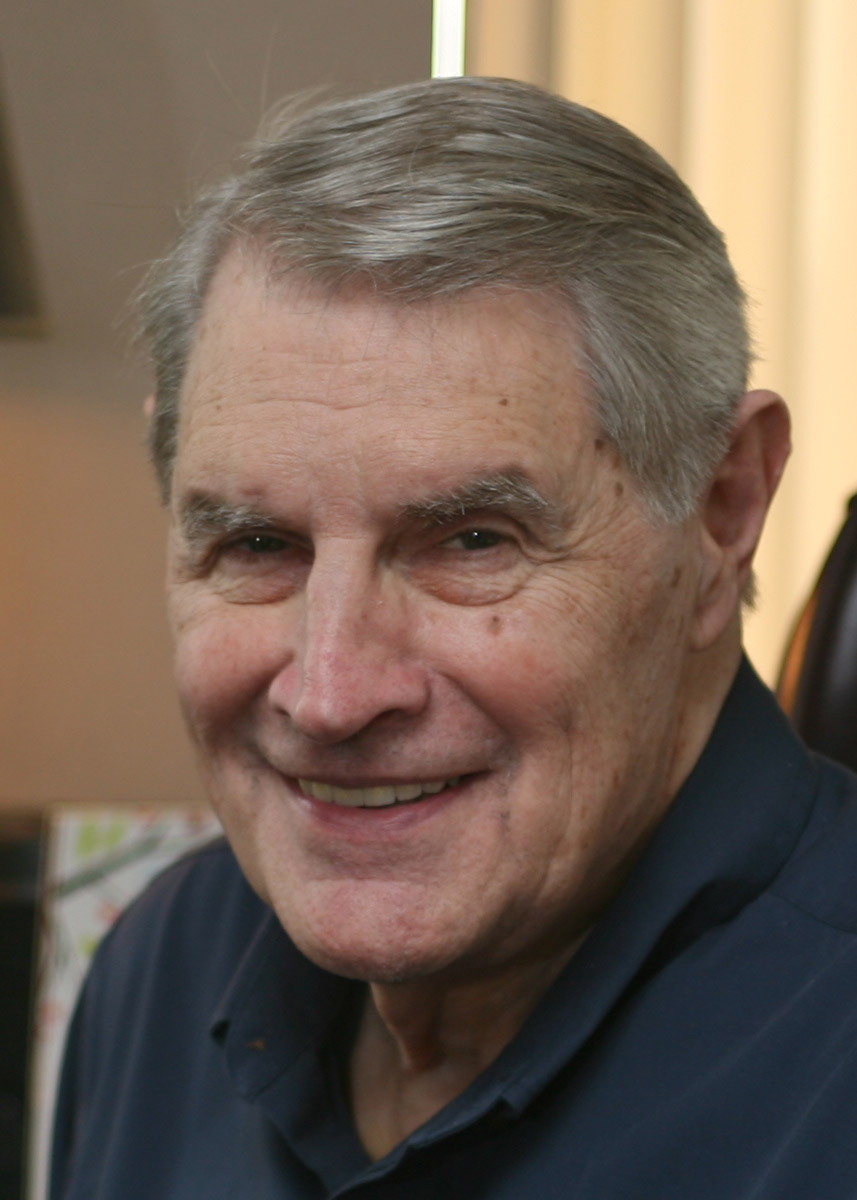 Dick Schwartz entered my life as an adjunct professor at the University of Maryland. I signed up for the six credit hour course- Cardiovascular Physiology and Pathology. From that stepping stone he was a member of our FEMA-funded, ground-breaking research tesm, conducting the first-ever study of the metabolic demands of structuiral fire suppression. We identified the aerobic and anaerobic constructs and contributions to working encumbered with SCBA and the PPE.
 Our friendship with Dick and his wife grew through life events including his marriage, his professional advancemet and later in setting up an Occupational Medicine practice in the Greater Washington, DC area.
I was honored to serve as a pallbearer and call him friend. The official obituary follows.
It is with great sadness and regrets that the physicians and staff of Cardiology Specialists of Virginia note the passing of Dr. Schwartz on December 20, 2022. Dr. Schwartz was a dedicated physician who dearly cared for his patients and loved his profession; he was our colleague and friend.
Dr. Schwartz began his private practice in the Northern Virginia area in 1974. He was the founder and medical director of a group cardiology practice in Arlington and Alexandria, VA. from 1974 to 2000. Dr. Schwartz received his medical degree from Cornell University in 1965. He served his Internship at Philadelphia General Hospital. His residency training was done in the Georgetown University Hospital program at D.C. General Hospital. Cardiology Fellowships were completed at Georgetown University Hospital and the Washington Center Hospital. He was Board Certified in Internal Medicine and Cardiovascular Disease. Dr. Schwartz held the rank of Lieutenant Commander during his military service in the U.S. Public Health Service. He was a Clinical Assistant Professor of Medicine at Georgetown University Hospital of Medicine. At the University of Maryland, he served as a consultant in cardiology, sports medicine and physical fitness. He was a Director of the Northern Virginia Institute for Continuing Education, Chairman of the Board for the Medical Society Services and Treasurer of the Medical Society of the District of Columbia. Dr. Schwartz was past Chairman of the D.C. Medical Society Committee on Physical Fitness and a charter member and past President of the Sports Medicine Association of Greater Washington. He was a frequent guest speaker and author on various healthcare and fitness topics. Active in rowing for over 30 years, Dr. Schwartz was a senior master sculler and has participated in the sport as a crew member, coach, and team physician. He was a member of national championship crews and rowed on the 1963 Pan American team.
Wednesday, December 14, 2022
From the Wall Street Journal
The current era is marked by fading trust in U.S. institutions, but confidence in one pillar has held up: the military. But now even that is eroding, and the question is whether the brass will get the message.
The Reagan Institute releases an annual survey of public attitudes on national defense, and this year only 48% reported having “a great deal of confidence” in the U.S. military in results first detailed here. That’s down from 70% in 2018, and within the margin error of last year’s 45%.
This is consistent with other surveys. Pew Research this year noted a 14-point drop since 2020 in Americans who said they had a great deal of confidence in the military to act in the public’s interest.
The Reagan poll asked Americans what is driving the decline. It isn’t the ability to carry out missions or win in a fight. It is “things going on outside the core competencies of the military,” says Reagan’s Roger Zakheim. “Call it politicization, call it wokeness,” but that’s where “you can connect the dots.”
Some 62% said “military leadership becoming overly politicized” reduced their confidence some or a great deal. That includes trust in civilians who give the orders. Americans offered some of the worst ratings for decisions made by Presidents, and the U.S. retreat from Afghanistan comes to mind.
Some 52% also had reduced confidence in uniformed officers. Half cited “so-called ‘woke’ practices undermining military effectiveness.” Some of these episodes—a brouhaha over maternity flight suits—are overblown. But others are revealing: An admiral suggested last year that to increase diversity the Navy should consider reviving the practice of looking at photos in promotion boards—i.e., to make decisions based explicitly on race.
General Mark Milley’s speech to Congress last year that he wanted to understand “white rage,” in response to reasonable inquiries about whether cadets at West Point should be learning critical race theory, was a lapse in judgment. Many Americans think the military is no longer an institution that runs on excellence, merit and individual submission to a larger cause.
The Pentagon denies this is a problem, but it surely is if half the public believes it. The military relies on young Americans to sign up amid many other career opportunities. Fewer are doing so. Americans on the left have their own reasons for declining confidence in the military: 46% cited right-wing extremism, even though this scourge has been wildly overstated.
This drop in confidence comes at an ominous moment, as the public seems to know. Some 75% in the Reagan survey viewed China as an enemy, up from 55% in 2018, and the percentage of those worried about Russia has doubled. Some 70% are concerned China might invade Taiwan within five years, and 61% support increasing the U.S. military’s Pacific footprint.
The good news is that these trends can be reversed, as they were in the years after Vietnam. As GOP Rep. Mike Gallagher put it to us, the poll is helpful in narrowing “what our failures are,” and it isn’t the rank-and-file or even the equipment. “Ukraine has been one long advertisement for American weapons systems.” But “it seems to be the leadership.”
Americans want their military to focus on preventing or winning the next war, not on serving the latest political fashion.
The Reagan Institute releases an annual survey of public attitudes on national defense, and this year only 48% reported having “a great deal of confidence” in the U.S. military in results first detailed here. That’s down from 70% in 2018, and within the margin error of last year’s 45%.
This is consistent with other surveys. Pew Research this year noted a 14-point drop since 2020 in Americans who said they had a great deal of confidence in the military to act in the public’s interest.
The Reagan poll asked Americans what is driving the decline. It isn’t the ability to carry out missions or win in a fight. It is “things going on outside the core competencies of the military,” says Reagan’s Roger Zakheim. “Call it politicization, call it wokeness,” but that’s where “you can connect the dots.”
Some 62% said “military leadership becoming overly politicized” reduced their confidence some or a great deal. That includes trust in civilians who give the orders. Americans offered some of the worst ratings for decisions made by Presidents, and the U.S. retreat from Afghanistan comes to mind.
Some 52% also had reduced confidence in uniformed officers. Half cited “so-called ‘woke’ practices undermining military effectiveness.” Some of these episodes—a brouhaha over maternity flight suits—are overblown. But others are revealing: An admiral suggested last year that to increase diversity the Navy should consider reviving the practice of looking at photos in promotion boards—i.e., to make decisions based explicitly on race.
General Mark Milley’s speech to Congress last year that he wanted to understand “white rage,” in response to reasonable inquiries about whether cadets at West Point should be learning critical race theory, was a lapse in judgment. Many Americans think the military is no longer an institution that runs on excellence, merit and individual submission to a larger cause.
The Pentagon denies this is a problem, but it surely is if half the public believes it. The military relies on young Americans to sign up amid many other career opportunities. Fewer are doing so. Americans on the left have their own reasons for declining confidence in the military: 46% cited right-wing extremism, even though this scourge has been wildly overstated.
This drop in confidence comes at an ominous moment, as the public seems to know. Some 75% in the Reagan survey viewed China as an enemy, up from 55% in 2018, and the percentage of those worried about Russia has doubled. Some 70% are concerned China might invade Taiwan within five years, and 61% support increasing the U.S. military’s Pacific footprint.
The good news is that these trends can be reversed, as they were in the years after Vietnam. As GOP Rep. Mike Gallagher put it to us, the poll is helpful in narrowing “what our failures are,” and it isn’t the rank-and-file or even the equipment. “Ukraine has been one long advertisement for American weapons systems.” But “it seems to be the leadership.”
Americans want their military to focus on preventing or winning the next war, not on serving the latest political fashion.
Subscribe to:
Posts (Atom)